
 EN
EN
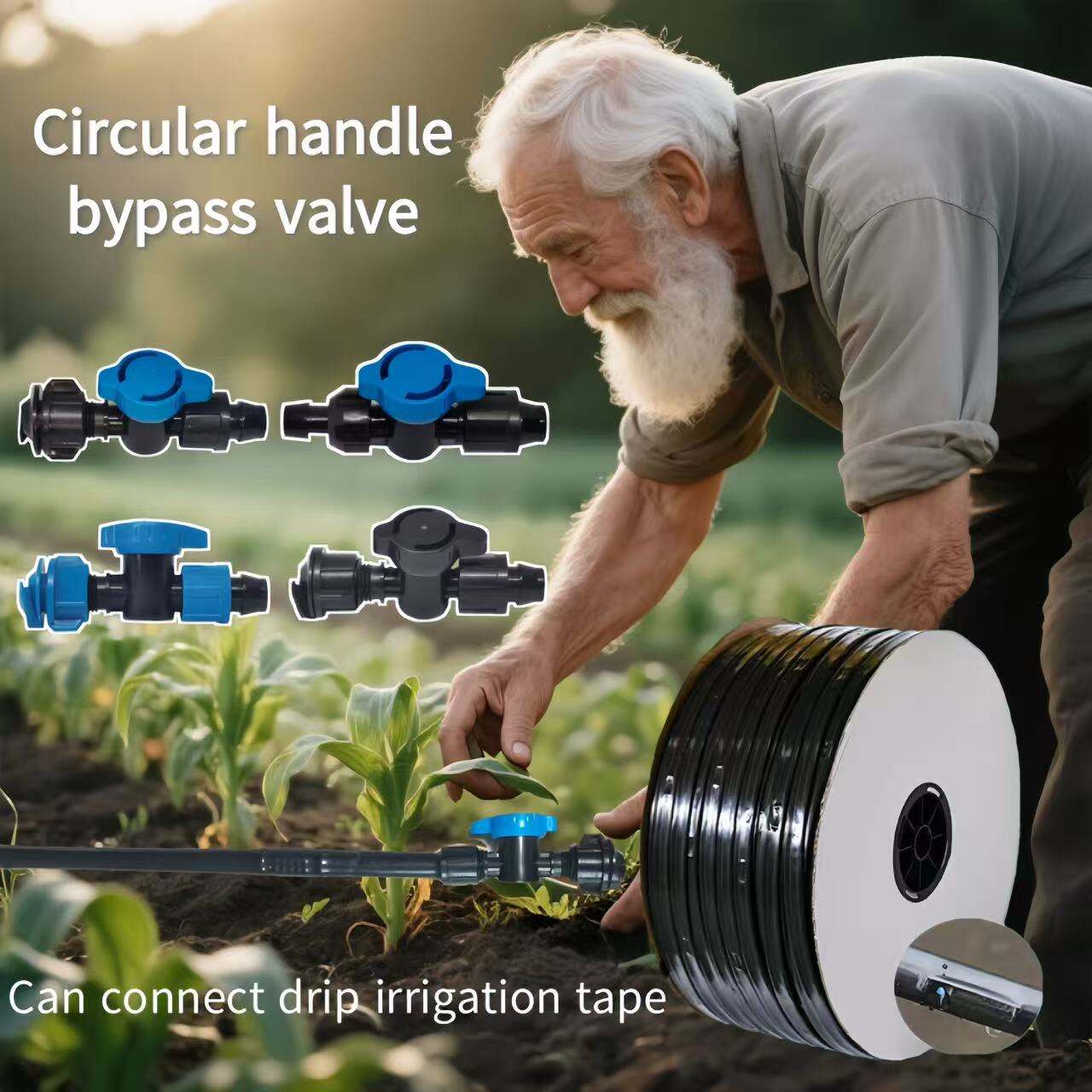
Vegetable farming demands precision in water management to achieve optimal yields, maintain crop quality, and ensure sustainable resource use. Selecting the right irrigation solutions for vegetable farming is critical for growers who face diverse challenges including variable climate conditions, soil types, water availability constraints, and the specific hydration needs of different vegetable crops. Modern irrigation technologies have evolved significantly beyond traditional flood irrigation methods, offering farmers targeted approaches that maximize water efficiency while minimizing labor costs and environmental impact. Understanding which irrigation solution aligns with your operational scale, crop selection, topography, and budget parameters directly influences both short-term harvest success and long-term farm profitability.
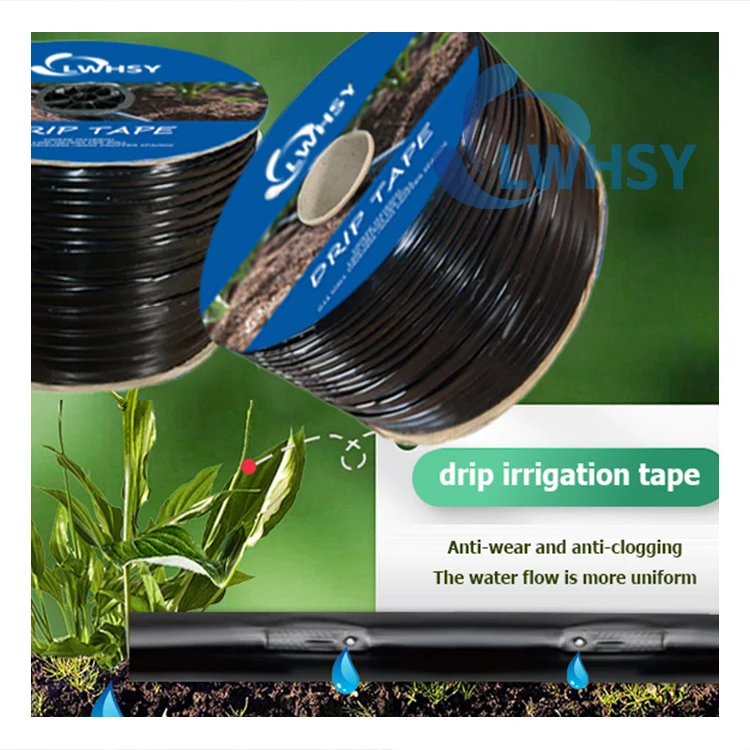
The complexity of vegetable cultivation requires irrigation systems that can adapt to varying growth stages, root zone characteristics, and water sensitivity across different species. From leafy greens requiring consistent moisture to root vegetables needing controlled irrigation to prevent splitting, the best irrigation solutions for vegetable farming provide flexibility, precision, and reliability. This comprehensive guide examines the leading irrigation technologies available to vegetable growers today, evaluating their suitability across different farming contexts, analyzing implementation considerations, and providing decision frameworks that help farmers select systems matching their specific operational requirements and agronomic goals.
Understanding Water Requirements Across Vegetable Crop Categories
Growth Stage Water Dynamics in Vegetable Production
Vegetable crops exhibit distinct water requirements that shift dramatically across germination, vegetative growth, flowering, and fruit development phases. During germination and early establishment, most vegetables require consistent shallow moisture to ensure uniform emergence and prevent seedling stress. As plants transition into vegetative growth, water needs increase substantially to support rapid leaf and stem development. Implementing appropriate irrigation solutions for vegetable farming during these critical phases prevents growth checks that can permanently reduce yield potential and delay harvest timing.
The reproductive phase presents particularly complex water management challenges, as many vegetable crops become highly sensitive to both water deficit and excess moisture. Tomatoes, peppers, and cucumbers require careful irrigation balance during fruit set to prevent blossom drop while avoiding excessive vegetative growth that diverts energy from fruit development. Root vegetables like carrots and beets need controlled moisture to prevent cracking or splitting that reduces marketability. Understanding these phase-specific requirements guides the selection of irrigation solutions for vegetable farming that offer programmable control, zone management capabilities, and responsive adjustment to crop development stages.
Species-Specific Hydration Tolerance Profiles
Different vegetable families demonstrate varying tolerance to irrigation approaches, with some thriving under overhead moisture while others require strictly root-zone delivery to prevent foliar disease. Brassicas including cabbage, broccoli, and cauliflower generally tolerate overhead irrigation well during vegetative stages but benefit from drip systems during head formation to reduce disease pressure. Solanaceous crops such as tomatoes and eggplants perform optimally with drip or subsurface irrigation that keeps foliage dry while maintaining consistent root zone moisture.
Leafy vegetables including lettuce, spinach, and Asian greens require frequent light irrigation to prevent tip burn and maintain tender leaf texture, making them well-suited to both micro-sprinkler and drip tape systems. Cucurbits like squash, melons, and cucumbers have extensive root systems that benefit from deeper, less frequent irrigation once established, though they require more frequent application during fruit sizing. Selecting irrigation solutions for vegetable farming based on these species-specific profiles ensures that system capabilities align with physiological requirements, preventing both underperformance due to water stress and crop losses from moisture-related diseases.
Root Zone Architecture and Irrigation Depth Management
The effective rooting depth of vegetable crops significantly influences irrigation system design and operation parameters. Shallow-rooted crops like lettuce, radishes, and green onions concentrate 80-90% of their roots in the top 15-30 centimeters of soil, requiring frequent light applications to maintain moisture availability in this limited zone. Deep-rooted vegetables including tomatoes, peppers, and winter squash develop root systems extending 60-120 centimeters deep when soil conditions permit, allowing less frequent but heavier irrigation events that encourage deeper root penetration.
Matching irrigation application patterns to root zone architecture represents a fundamental principle in selecting effective irrigation solutions for vegetable farming. Systems that apply water too deeply waste resources and increase leaching of nutrients below the active root zone, while excessively shallow irrigation promotes weak root development and increases crop vulnerability to heat stress. Modern drip and micro-irrigation technologies enable precise delivery to targeted soil depths, while programmable controllers allow farmers to adjust application duration and frequency as crops mature and root systems expand throughout the growing season.
Drip Irrigation Systems for Precision Vegetable Production
Inline Emitter Technology and Flow Rate Selection
Drip irrigation systems equipped with inline emitters represent one of the most efficient irrigation solutions for vegetable farming, delivering water directly to root zones with minimal evaporation or runoff losses. Inline emitter systems feature pre-installed emission points spaced at regular intervals along flexible tubing, with typical spacing ranging from 15 to 60 centimeters depending on crop row configuration and soil texture. The flow rate at each emitter point, commonly ranging from 0.6 to 2.3 liters per hour, determines irrigation duration requirements and influences moisture distribution patterns in the soil profile.
Selecting appropriate emitter spacing and flow rates requires careful analysis of crop planting patterns, soil water holding capacity, and root spread characteristics. Sandy soils with limited lateral water movement benefit from closer emitter spacing or higher flow rates to ensure adequate wetting width, while clay and loam soils allow wider spacing due to enhanced horizontal percolation. Vegetable crops planted in dense configurations like salad greens and baby leaf production require closer emitter spacing compared to widely spaced crops like winter squash or determinate tomatoes. The flexibility to customize these parameters makes drip systems highly adaptable irrigation solutions for vegetable farming across diverse production scenarios.
Pressure Compensation and Uniform Distribution on Varied Terrain
Vegetable farms operating on sloped or undulating terrain face significant challenges maintaining uniform water distribution across all production areas when using non-compensating irrigation systems. Pressure variations caused by elevation differences result in higher flow rates at lower elevations and reduced delivery at high points, creating yield variability and uneven crop maturity. Pressure-compensating drip emitters incorporate internal mechanisms that regulate flow rates across a specified pressure range, typically maintaining uniform output despite pressure variations of 50-150 kPa along lateral lines.
This pressure regulation capability makes compensating systems particularly valuable as irrigation solutions for vegetable farming on properties with topographic variation or in long field runs where friction losses would otherwise create significant pressure gradients. While pressure-compensating emitters carry higher initial costs compared to non-compensating alternatives, they eliminate the need for complex zone division and multiple valve systems to achieve uniform application. For commercial vegetable operations where crop uniformity directly impacts harvest efficiency and marketable yield percentages, the investment in pressure-compensating technology typically generates strong return through improved production consistency.
Drip Tape Versus Rigid Drip Tubing Applications
Drip tape systems utilize thin-walled, collapsible tubing with integrated emitters, offering an economical option particularly suited to annual vegetable production where irrigation lines are replaced each season. Drip tape typically ranges from 0.15 to 0.38 millimeters in wall thickness and is designed for single-season or limited multi-season use, making it cost-effective for crops with relatively short production cycles. The lightweight nature of drip tape facilitates easy installation and removal, while its flexibility allows it to conform to plastic mulch and raised bed configurations common in intensive vegetable production.
Rigid drip tubing with thicker walls ranging from 0.6 to 1.2 millimeters provides greater durability for perennial vegetable crops like asparagus or in systems designed for multi-year operation without seasonal removal. The enhanced structural integrity of rigid tubing better resists damage from field equipment, rodents, and UV exposure, potentially extending service life to 5-10 years with proper maintenance. When evaluating irrigation solutions for vegetable farming, producers must weigh the lower per-season cost of drip tape against the reduced labor requirements and long-term economics of permanent rigid systems, with the optimal choice depending on crop rotation patterns, equipment compatibility, and labor availability for seasonal installation and removal tasks.
Micro-Sprinkler and Overhead Irrigation Approaches
Low-Angle Micro-Sprinkler Configuration for Crop Cooling
Micro-sprinkler systems deliver water through small spray heads that distribute moisture over circular or semicircular patterns, typically covering 2-6 meter diameters depending on pressure and nozzle selection. These systems function as effective irrigation solutions for vegetable farming in regions experiencing high temperature stress, as the foliar wetting and evaporative cooling effect can reduce canopy temperatures by 3-7 degrees Celsius during peak heat periods. This cooling benefit proves particularly valuable for cool-season crops like broccoli and lettuce grown during warm periods, helping maintain quality and extend harvest windows.
The elevated moisture environment created by micro-sprinklers does increase disease risk for certain vegetables, requiring careful timing of irrigation events to allow foliage drying before evening. Morning application schedules minimize disease pressure while still providing midday cooling benefits. Micro-sprinkler systems also excel in establishing direct-seeded vegetables, where they provide uniform germination moisture across the soil surface without soil crusting issues sometimes associated with overhead impact sprinklers. The combination of establishment support and heat stress mitigation makes micro-sprinklers valuable complementary irrigation solutions for vegetable farming operations that also employ drip systems for primary irrigation.
Center Pivot and Linear Move Automation in Large-Scale Operations
Large-scale vegetable production operations spanning 20 hectares or more increasingly employ mechanized overhead irrigation systems including center pivots and linear move machines that automate water application across extensive field areas. These systems eliminate the labor requirements associated with moving portable sprinkler equipment while providing programmable application rates, travel speeds, and operational timing. Modern pivot systems equipped with low-pressure precision applicators and drop tubes can achieve application efficiencies exceeding 85%, approaching the performance of ground-level drip systems while irrigating large areas with minimal labor input.
The capital investment required for mechanized systems typically ranges from $1,000 to $2,500 per hectare, making them economically viable primarily for operations with sufficient scale to distribute fixed costs across large production areas. These systems function as practical irrigation solutions for vegetable farming enterprises growing processing vegetables, field-grown sweet corn, or other crops where the overhead wetting is agronomically acceptable and harvest mechanization requires unobstructed field access. Variable rate irrigation capability available on advanced pivot systems allows producers to adjust application rates across the irrigated area in response to soil variability or crop development differences, optimizing water use efficiency even within large uniform fields.
Portable Sprinkler Networks for Operational Flexibility
Portable sprinkler systems utilizing aluminum or PVC laterals with riser-mounted impact or gear-driven sprinklers provide operational flexibility for diversified vegetable farms cultivating multiple crop types across varied field configurations. These systems allow farmers to concentrate irrigation capacity in actively growing fields while leaving fallow or mature areas unirrigated, improving capital efficiency compared to permanent installations that may sit idle during portions of the season. The ability to reconfigure sprinkler placement accommodates crop rotation patterns and changing field use, making portable systems adaptable irrigation solutions for vegetable farming operations that value flexibility over automation.
Labor requirements for moving lateral lines typically range from 15 to 45 minutes per hectare depending on system design, soil conditions, and crew experience, representing a significant operational consideration. This labor demand has decreased portable sprinkler adoption in regions with high labor costs or labor availability constraints, though farms with family labor or dedicated irrigation crews continue to successfully operate these systems. Portable sprinklers also provide backup irrigation capacity when primary drip systems experience failures, offering operational resilience that justifies maintaining portable equipment even on farms that have invested in permanent irrigation infrastructure.
Subsurface Drip Irrigation for Long-Term Vegetable Production
Installation Depth and Crop Compatibility Considerations
Subsurface drip irrigation installs emitter tubing below the soil surface at depths typically ranging from 15 to 45 centimeters, depending on crop rooting patterns and tillage requirements. This placement protects irrigation infrastructure from surface damage, eliminates evaporation losses, and keeps the soil surface drier to reduce weed germination and disease pressure. For vegetable production, subsurface systems work optimally with perennial crops like asparagus or in permanent bed systems where soil disturbance is minimized across multiple growing seasons, making them specialized irrigation solutions for vegetable farming operations committed to reduced tillage practices.
Installation depth selection requires balancing multiple factors including crop root distribution, tillage depth requirements, and maintenance accessibility. Shallow installation at 15-20 centimeters facilitates easier repair and replacement but increases vulnerability to cultivation damage and may position emitters above the primary root zone of deep-rooted vegetables. Deeper installation at 30-45 centimeters protects infrastructure but requires larger initial investments in excavation and may reduce irrigation efficiency for shallow-rooted crops. Successful subsurface systems typically employ crop rotations planned around the installed depth, focusing on vegetables with compatible root architectures that maximize the system utilization across the investment lifespan.
Root Intrusion Prevention and Filtration Requirements
Subsurface drip systems face unique maintenance challenges related to root intrusion into emitter outlets and tubing interiors, as plant roots naturally grow toward consistent moisture sources. Many vegetable crops, particularly tomatoes, cucurbits, and perennial species, exhibit aggressive root growth that can colonize drip tubing and block emitter outlets within a single growing season without appropriate prevention measures. Modern subsurface irrigation solutions for vegetable farming incorporate physical barriers like copper-impregnated emitter membranes or chemical treatment protocols using herbicides registered for subsurface injection to prevent root establishment within irrigation infrastructure.
Beyond root intrusion, subsurface systems demand rigorous filtration to prevent emitter clogging from sediment, organic matter, and microbial biofilms that accumulate more readily in buried environments. Effective filtration typically requires multi-stage systems including screen filters rated to 120-150 mesh and disc filters providing redundant protection against particle passage. Regular system flushing and periodic acid treatment to dissolve mineral precipitates maintain long-term performance, with maintenance intensity generally higher than surface drip systems. These additional maintenance requirements and upfront installation costs position subsurface drip as premium irrigation solutions for vegetable farming operations with stable production systems and commitment to long-term infrastructure management.
Surface Moisture Management and Fertigation Precision
The dry soil surface characteristic of subsurface drip irrigation provides significant advantages for disease management, reducing foliar disease pressure and allowing field access shortly after irrigation events without soil compaction concerns. However, this surface dryness can complicate establishment of direct-seeded vegetables that require surface moisture for germination. Growers address this challenge through supplemental sprinkler irrigation during establishment phases or by using transplants that position root systems nearer the subsurface drip line depth, integrating multiple irrigation solutions for vegetable farming within a single operation.
Subsurface systems excel in fertigation applications, delivering nutrients directly to active root zones with minimal loss to volatilization or surface runoff. This precision enables split fertilizer applications timed to crop uptake patterns, reducing total nutrient inputs while maintaining or improving yields. The combination of water and nutrient use efficiency makes subsurface drip particularly attractive for high-value vegetable production in regions facing water scarcity or environmental regulations limiting nutrient discharge. When properly designed and managed, subsurface systems can operate efficiently for 10-15 years, distributing substantial installation costs across multiple production cycles and potentially generating favorable economics despite higher initial investment compared to surface irrigation alternatives.
Integration Strategies and System Selection Decision Frameworks
Hybrid Irrigation Approaches for Risk Management
Progressive vegetable farming operations increasingly adopt hybrid irrigation strategies that combine multiple technologies to address diverse crop requirements, manage operational risk, and provide backup capacity during system failures or peak demand periods. A common configuration pairs drip irrigation for primary crop water delivery with portable or permanent sprinkler capacity for germination support, frost protection, and emergency backup. This diversified approach recognizes that no single irrigation technology optimally serves all situations, positioning hybrid systems as comprehensive irrigation solutions for vegetable farming enterprises managing complex production portfolios.
The redundancy inherent in hybrid systems provides operational resilience particularly valuable during critical growth phases when irrigation interruptions could result in significant crop losses. If primary drip systems experience filtration failures, pressure losses, or damage from field operations, backup sprinkler capacity maintains crop viability while repairs are completed. This insurance value justifies the additional capital investment for risk-averse operations or those growing high-value crops where irrigation failure consequences substantially exceed backup system costs. Hybrid approaches also facilitate crop diversification strategies, allowing farms to optimize irrigation for each crop type rather than compromising performance by forcing all production into a single irrigation framework.
Economic Analysis and Return on Investment Modeling
Selecting optimal irrigation solutions for vegetable farming requires comprehensive economic analysis that extends beyond simple capital cost comparison to incorporate operational expenses, labor requirements, water savings, yield impacts, and expected system lifespan. Drip irrigation systems typically demonstrate 20-40% water savings compared to sprinkler alternatives, generating substantial value in water-scarce regions or operations paying volumetric water charges. These water savings translate to reduced pumping costs and, in regulated environments, may enable production expansion on existing water allocations that would otherwise limit farm growth.
Labor cost differentials significantly influence relative economics across irrigation technologies, with automated drip and pivot systems requiring minimal labor for routine operation while portable sprinklers demand consistent crew time for line movement. In high labor cost regions, this operational expense difference often outweighs capital cost advantages of less expensive systems, making automation-capable technologies economically superior despite higher installation costs. Yield improvements associated with precision irrigation further enhance returns, with well-managed drip systems commonly producing 10-25% higher marketable yields compared to less precise alternatives. Comprehensive economic modeling incorporating all these factors enables evidence-based selection of irrigation solutions for vegetable farming that optimize long-term profitability rather than simply minimizing initial investment.
Climate Adaptation and Water Resource Sustainability
Increasing climate variability and water resource constraints position irrigation system selection as a critical adaptation strategy for vegetable farming operations planning long-term sustainability. Efficient irrigation technologies that maximize crop production per unit of applied water enhance operational resilience against drought conditions and regulatory restrictions likely to intensify in many production regions. Drip and subsurface systems offering application efficiencies exceeding 90% provide substantial advantages over overhead alternatives losing 15-30% of applied water to evaporation and wind drift, making them priority irrigation solutions for vegetable farming in water-limited environments.
Beyond water conservation, climate-adapted irrigation systems incorporate flexibility to modify application timing, duration, and intensity in response to variable weather patterns. Programmable controllers with weather-based adjustment algorithms, soil moisture sensor integration, and remote operation capabilities enable precise irrigation management that responds to real-time conditions rather than rigid schedules. This adaptive capacity reduces both overwatering during cool, humid periods and crop stress during unexpected heat events, optimizing resource use while maintaining production stability. As climate unpredictability increases, this operational flexibility becomes an increasingly important selection criterion for irrigation solutions for vegetable farming positioned for long-term viability.
FAQ
What is the most water-efficient irrigation solution for small-scale vegetable farming?
For small-scale vegetable operations typically under 2 hectares, drip tape systems offer the optimal combination of water efficiency, installation simplicity, and capital cost accessibility. These systems achieve 85-92% application efficiency while requiring minimal technical expertise for installation and operation. The flexible tubing adapts easily to raised beds and plastic mulch configurations common in intensive vegetable production, and seasonal removal allows crop rotation flexibility. Small farms benefit from starting with manual valve control and basic filtration, then upgrading to automation and fertigation capabilities as operational experience and capital availability increase. This scalable approach makes drip irrigation solutions for vegetable farming accessible to beginning growers while providing expansion pathways as operations mature.
How do I determine the right emitter spacing for my vegetable crops?
Emitter spacing selection depends on soil texture, crop row spacing, and plant density within rows. Clay and loam soils with good lateral water movement can effectively utilize 30-45 centimeter emitter spacing for most vegetables, while sandy soils with limited horizontal percolation require closer spacing of 15-30 centimeters to ensure adequate root zone coverage. Densely planted crops like salad greens, carrots, and onions benefit from 20-30 centimeter spacing regardless of soil type to ensure overlapping wetting patterns. Widely spaced crops such as tomatoes, peppers, and cucurbits may function adequately with 30-60 centimeter emitter spacing on finer-textured soils. Conducting initial soil wetting pattern observations by excavating after irrigation events helps verify that chosen spacing achieves desired moisture distribution before committing to full field installation.
Can overhead irrigation systems work effectively for organic vegetable production?
Overhead irrigation can function successfully in organic vegetable systems with careful disease management and crop selection strategies. Morning irrigation timing that allows foliage drying before evening reduces fungal disease pressure that represents the primary concern with overhead wetting. Organic producers often employ overhead systems for crop establishment and then transition to drip irrigation once plants reach sufficient size, combining the germination advantages of overhead application with the disease-reducing benefits of drip during productive phases. Crops with inherent disease resistance like squash, sweet corn, and many root vegetables tolerate overhead irrigation throughout their growth cycle. However, highly disease-susceptible crops including tomatoes and cucumbers perform better under drip or ground-level irrigation that maintains dry foliage. This selective approach allows organic operations to utilize overhead systems strategically as component irrigation solutions for vegetable farming within diversified production systems.
What maintenance schedule should I follow for drip irrigation systems in vegetable production?
Effective drip system maintenance requires daily visual inspection during operation to identify leaks, emitter failures, or pressure irregularities that indicate developing problems. Weekly tasks include checking and cleaning filters, flushing lateral ends to remove accumulated sediment, and verifying uniform flow across irrigation zones. Monthly maintenance should include inspection of pressure regulators and valve operation, review of system pressure readings against design specifications, and evaluation of crop uniformity to detect irrigation distribution issues. Seasonal maintenance at the end of each growing cycle involves comprehensive system flushing, acid treatment if mineral deposits are present, inspection and replacement of damaged components, and proper winterization in freezing climates. This systematic maintenance approach prevents minor issues from escalating into crop-damaging failures and extends system lifespan, protecting the investment in irrigation solutions for vegetable farming infrastructure.
Table of Contents
- Understanding Water Requirements Across Vegetable Crop Categories
- Drip Irrigation Systems for Precision Vegetable Production
- Micro-Sprinkler and Overhead Irrigation Approaches
- Subsurface Drip Irrigation for Long-Term Vegetable Production
- Integration Strategies and System Selection Decision Frameworks
-
FAQ
- What is the most water-efficient irrigation solution for small-scale vegetable farming?
- How do I determine the right emitter spacing for my vegetable crops?
- Can overhead irrigation systems work effectively for organic vegetable production?
- What maintenance schedule should I follow for drip irrigation systems in vegetable production?