
 EN
EN
Building a water-saving irrigation system for orchards represents one of the most critical investments modern fruit growers can make to ensure long-term productivity, profitability, and environmental sustainability. With increasing water scarcity, rising operational costs, and stricter environmental regulations, orchard managers must adopt precision irrigation technologies that deliver water directly to root zones while minimizing waste through evaporation, runoff, and deep percolation. A properly designed water-saving irrigation system not only conserves precious water resources but also improves fruit quality, reduces disease pressure, lowers labor costs, and enhances overall orchard health by maintaining optimal soil moisture levels throughout the growing season.
The process of constructing an efficient water-saving irrigation system involves careful planning, component selection, hydraulic design, and installation practices tailored to your specific orchard conditions. Whether you manage a small family orchard or a large commercial operation spanning hundreds of acres, the fundamental principles remain consistent: deliver the right amount of water to each tree at the right time with minimal losses. This comprehensive guide walks you through every critical step, from initial site assessment and system design to component installation and operational management, ensuring your orchard benefits from modern irrigation efficiency while reducing water consumption by up to seventy percent compared to traditional methods.
Understanding Your Orchard's Water Requirements and Site Conditions
Conducting a Comprehensive Site Assessment
Before designing your water-saving irrigation system, you must thoroughly evaluate your orchard's unique characteristics, starting with soil type and structure. Different soil textures—from sandy loam to heavy clay—possess vastly different water-holding capacities and infiltration rates that directly influence emitter selection, spacing patterns, and irrigation scheduling. Conduct soil tests across multiple locations within your orchard to map variations in texture, organic matter content, pH levels, and nutrient availability. Sandy soils with low water-retention capacity require more frequent irrigation cycles with lower application volumes, while clay soils benefit from longer irrigation intervals with carefully controlled application rates to prevent surface runoff and waterlogging.
Topography plays an equally crucial role in water-saving irrigation system design, as slope gradients affect water distribution uniformity and system hydraulic performance. Map elevation changes throughout your orchard using GPS equipment or topographic surveys to identify high points, low areas, and slope percentages that influence pressure variations within the distribution network. Steep slopes may require pressure-compensating emitters or pressure-regulating valves to maintain consistent flow rates across all irrigation zones. Understanding water source characteristics—whether well, reservoir, municipal supply, or surface water—helps determine pumping requirements, filtration needs, and water quality considerations that affect long-term system performance and component longevity.
Calculating Crop Water Demand and Irrigation Scheduling Parameters
Accurate estimation of crop evapotranspiration rates forms the foundation of efficient irrigation scheduling for any water-saving irrigation system. Reference evapotranspiration data from local weather stations combined with crop coefficients specific to your fruit variety, tree age, and growth stage allow precise calculation of daily water requirements. Mature apple trees, for example, may require between twenty-five and forty gallons per tree per day during peak summer periods, while young citrus trees need significantly less. Factor in effective rainfall, soil moisture storage capacity, and root zone depth to develop irrigation schedules that replenish only the water actually consumed by trees without excess application.
Tree spacing patterns and canopy coverage percentages directly influence system design parameters for your water-saving irrigation system. Closely spaced high-density orchards with overlapping canopies require different emitter configurations than traditional widely-spaced plantings. Calculate wetted soil volume requirements based on root distribution patterns, ensuring that at least forty to sixty percent of the active root zone receives adequate moisture. Modern precision agriculture tools including soil moisture sensors, dendrometers, and thermal imaging cameras provide real-time feedback on tree water status, enabling adaptive irrigation management that responds to actual plant needs rather than relying solely on predetermined schedules.
Selecting the Right Components for Maximum Water Efficiency
Choosing Appropriate Drip Irrigation Emitters and Delivery Systems
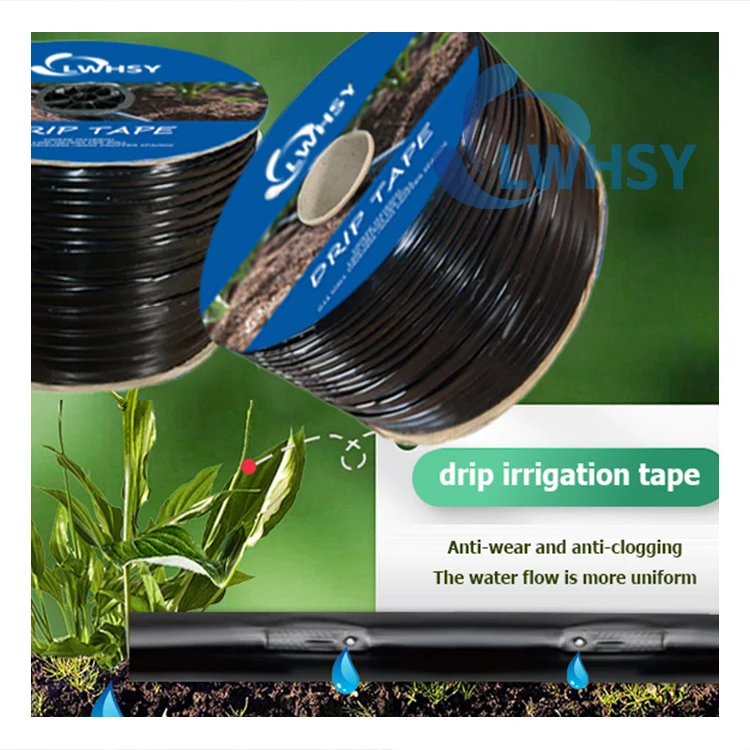
The heart of any effective water-saving irrigation system lies in selecting emitters that match your orchard's specific requirements for flow rate, spacing, and pressure compensation. Inline drip tape with pre-installed flat emitters offers exceptional uniformity and cost-effectiveness for row crop orchards, delivering precise water volumes directly to root zones with minimal evaporation losses. These systems typically feature emitter flow rates ranging from point-five to two gallons per hour, with spacing intervals between twelve and twenty-four inches depending on soil type and tree requirements. Pressure-compensating emitters maintain consistent output across varying pressures caused by elevation changes or friction losses, ensuring every tree receives equal water regardless of its position within the irrigation zone.
For permanent orchard installations, individual emitter systems with multiple discharge points per tree provide superior flexibility and longevity compared to disposable drip tape. Installing four to eight emitters around each tree's drip line creates a wetted root zone that encourages lateral root development and maximizes water uptake efficiency. When implementing a water-saving irrigation system, consider adjustable flow emitters that allow fine-tuning of application rates as trees mature and water requirements change over time. Button-style drippers with stakes offer easy repositioning during early orchard establishment, while inline emitters integrated into polyethylene lateral lines provide cleaner aesthetics and reduced maintenance requirements for mature plantings.
Designing Filtration and Water Treatment Infrastructure
Proper filtration represents a non-negotiable requirement for long-term performance and reliability of any water-saving irrigation system, as emitter clogging from suspended particles, organic matter, or chemical precipitates dramatically reduces system efficiency and uniformity. Primary filtration using screen or disc filters with mesh ratings between one hundred twenty and two hundred microns removes sand, silt, and debris from the water supply before it enters distribution lines. Select filter capacity based on peak system flow rates with adequate oversizing to accommodate filter cleaning cycles without interrupting irrigation operations. Automatic backflushing filters reduce labor requirements in larger installations by periodically reversing flow direction to purge accumulated debris without manual intervention.
Water quality analysis guides additional treatment requirements for your water-saving irrigation system beyond basic particle filtration. High iron content water requires oxidation treatment and settlement before filtration to prevent red-brown staining and biological growth within emitters. Calcium carbonate hardness above two hundred parts per million may necessitate acidification systems that inject dilute acids to lower pH and prevent mineral scale formation. Water sources with high bacterial loads or algae content benefit from chlorination or ultraviolet sterilization to prevent biofilm development that clogs emitters and reduces flow uniformity. Regular water testing throughout the irrigation season enables proactive adjustments to treatment protocols before problems manifest as reduced system performance.
Implementing Proper System Layout and Hydraulic Design
Establishing Efficient Mainline and Submain Distribution Networks
Hydraulic design of distribution piping forms the backbone of an efficient water-saving irrigation system, balancing pressure uniformity requirements against installation cost constraints. Size mainline pipes to limit friction losses below ten percent of available pressure when operating at design flow rates, typically requiring larger diameter pipes than initially apparent for longer runs or higher flow volumes. Use polyethylene pipe rated for irrigation pressure with diameter selections ranging from two inches for small orchards to six inches or larger for extensive commercial installations. Strategic placement of mainlines along high points or central corridors minimizes elevation-induced pressure variations and reduces the total length of smaller lateral distribution lines.
Divide your orchard into manageable irrigation zones based on tree age, variety, soil type, or topography to optimize water application uniformity within each zone. Zone sizing should balance operational flexibility against infrastructure costs, with typical commercial orchards ranging from two to ten acres per zone depending on water availability and pump capacity. Install pressure regulators at zone entry points to maintain consistent operating pressure regardless of flow variations in other parts of the system. Submain distribution lines branching from the mainline should follow tree rows, with properly sized takeoff fittings and smooth-bore connections that minimize turbulence and pressure losses throughout the water-saving irrigation system network.
Installing Lateral Lines and Emitter Placement Configurations
Lateral line installation techniques significantly impact both initial system performance and long-term maintenance requirements for your water-saving irrigation system. Position drip lines along tree rows at consistent distances from trunks, typically eighteen to thirty-six inches from the base depending on tree size and root distribution patterns. Secure lateral lines with appropriate stakes or anchoring devices at intervals of four to six feet to prevent displacement from wind, equipment traffic, or thermal expansion during temperature fluctuations. For sloped terrain, install laterals perpendicular to slope direction when possible to minimize pressure variation along individual lines, or compensate with pressure-compensating emitters if layouts require upslope or downslope configurations.
Emitter spacing and placement patterns within your water-saving irrigation system should create wetted soil volumes that adequately cover the active root zone without excessive overlap or gaps. For mature trees with established root systems, position multiple emitters in a circular or semi-circular pattern around the canopy drip line where feeder root density is highest. Young trees benefit from clustered emitters near the trunk that gradually shift outward as roots expand during establishment years. Consider dual lateral configurations for wide tree rows, with drip lines running along both sides of the row to create symmetrical wetted zones that encourage balanced root development. Shallow-rooted crops or sandy soils may require closer emitter spacing of twelve inches, while deep-rooted trees in loam soils function effectively with twenty-four inch spacing intervals.
Integrating Automation and Control Systems for Optimal Efficiency
Implementing Timer-Based and Sensor-Driven Irrigation Controllers
Automated control systems transform a basic water-saving irrigation system into a precision management tool that optimizes water application timing and duration without constant manual supervision. Battery-powered or solar-charged irrigation controllers with multiple station outputs allow independent scheduling for each orchard zone based on specific crop requirements, soil conditions, and recent weather patterns. Program controllers with multiple daily start times during peak water demand periods, using shorter frequent cycles that improve infiltration on heavier soils while preventing runoff. Advanced controllers with weather-based adjustment features automatically modify irrigation schedules based on real-time evapotranspiration calculations derived from temperature, humidity, wind speed, and solar radiation data.
Soil moisture sensor integration elevates your water-saving irrigation system from schedule-based to demand-based operation, applying water only when soil moisture levels drop below predetermined thresholds. Install sensors at multiple depths within the active root zone of representative trees across different soil types or topographic positions throughout your orchard. Capacitance sensors, tensiometers, or granular matrix sensors provide continuous feedback to controllers that pause scheduled irrigations when adequate soil moisture is present, preventing unnecessary water applications after significant rainfall or during periods of reduced evapotranspiration demand. Wireless sensor networks eliminate trenching requirements for data transmission, simplifying installation while providing centralized monitoring of soil moisture status across large orchard areas.
Establishing Fertigation Capabilities and Chemical Injection Systems
Fertigation through your water-saving irrigation system dramatically improves nutrient use efficiency by delivering fertilizers directly to the active root zone in dissolved form for immediate plant uptake. Install venturi injectors, positive displacement pumps, or pressure differential tanks at appropriate locations within the distribution system to inject liquid fertilizers, acids, or other water-soluble amendments during irrigation cycles. Size injection equipment based on fertilizer concentration requirements and system flow rates, ensuring adequate mixing and distribution throughout all irrigation zones. Separate injection points for different zones provide flexibility to customize nutrient applications based on tree age, growth stage, or soil fertility variations across your orchard.
Safety protocols and backflow prevention devices are mandatory when incorporating chemical injection capabilities into your water-saving irrigation system to protect water sources from contamination. Install reduced pressure zone devices or atmospheric vacuum breakers between the water source and any chemical injection point, maintaining these backflow preventers according to local regulations and manufacturer specifications. Create calibration procedures for injection equipment that verify accurate chemical delivery rates before beginning fertigation programs, and install chemical-resistant check valves downstream of injection points to prevent fertilizer backflow into clean water lines. Proper fertigation management through your water-saving irrigation system not only improves crop nutrition but also reduces fertilizer costs through enhanced efficiency and minimized leaching losses.
Maintaining System Performance Through Regular Inspection and Maintenance
Conducting Routine System Inspections and Performance Monitoring
Systematic inspection protocols maintain your water-saving irrigation system at peak efficiency throughout its operational lifespan, identifying potential problems before they escalate into costly failures or significant yield impacts. Walk each irrigation zone weekly during active growing seasons, visually checking for leaks, damaged components, clogged emitters, or uneven wetted patterns that indicate distribution problems. Use catch-can tests or emitter flow measurements to quantify distribution uniformity across zones, targeting uniformity coefficients above eighty-five percent for optimal performance. Pressure monitoring at multiple points throughout the system helps identify developing filter clogging, pipe restrictions, or valve malfunctions that compromise hydraulic performance.
Document system performance metrics including operating pressures, flow rates, filter differential pressures, and pump run times to establish baseline values that reveal gradual degradation over time. Compare actual application depths against programmed schedules using soil moisture data or catch containers placed beneath emitters during test runs. Thermal imaging of tree canopies can reveal irrigation uniformity issues by highlighting temperature variations associated with water stress in under-irrigated areas. Regular performance monitoring of your water-saving irrigation system enables data-driven maintenance decisions and provides early warning of component wear, allowing scheduled replacement before complete failure disrupts irrigation operations during critical growth periods.
Performing Seasonal Maintenance and System Winterization
End-of-season maintenance procedures protect your water-saving irrigation system investment from freeze damage, extend component life, and ensure reliable startup when irrigation season resumes. Flush all mainlines, submains, and lateral lines with clean water to remove accumulated sediment, biofilm, or fertilizer residues that could cause emitter clogging or corrosion during dormant periods. Disassemble and clean all filters, inspecting screens or discs for damage that requires replacement before next season. Drain water from all pipes in cold climates to prevent freeze-expansion damage, using low-point drains and compressed air purging to remove trapped water from lateral lines lying on or near the soil surface.
Pre-season preparation brings your water-saving irrigation system back to full operational status efficiently and reliably. Inspect all above-ground components for damage from weather, animals, or equipment traffic that occurred during dormancy, replacing deteriorated fittings, damaged pipes, or worn valve components. Test each irrigation zone individually, verifying proper valve operation, checking for new leaks, and confirming uniform water distribution before trees break dormancy and water demand increases. Recalibrate injection equipment, replace filter elements, and update controller programs based on planned changes to crop configuration or anticipated seasonal conditions. Proactive seasonal maintenance minimizes mid-season breakdowns that compromise irrigation uniformity and crop performance during periods of peak water demand.
FAQ
What is the typical cost per acre to install a water-saving irrigation system in an orchard?
Installation costs for a water-saving irrigation system in orchards typically range from fifteen hundred to four thousand dollars per acre, depending on system complexity, component quality, terrain challenges, and labor rates. Basic drip tape systems with manual valves and simple filtration represent the lower end of this range, while fully automated systems with pressure compensation, weather-based controllers, soil moisture sensors, and fertigation capabilities approach the higher cost threshold. Factors that increase installation expenses include difficult topography requiring extensive pipe networks or pressure regulation, poor water quality demanding sophisticated filtration and treatment systems, and remote locations with limited contractor availability. Despite higher upfront investment compared to traditional irrigation methods, water-saving irrigation systems typically achieve payback within three to five years through reduced water costs, lower energy consumption, improved yields, and decreased labor requirements for irrigation management.
How much water can an orchard save by switching to a drip irrigation system?
Orchards transitioning from conventional sprinkler or flood irrigation to properly designed water-saving irrigation systems typically reduce total water consumption by forty to seventy percent while maintaining or improving crop yields and fruit quality. The magnitude of water savings depends on baseline irrigation efficiency, climate conditions, soil characteristics, and management practices. Drip irrigation eliminates most evaporation losses that occur with overhead sprinklers, virtually eliminates surface runoff on sloped terrain, and dramatically reduces deep percolation below the root zone through precise application control. Additional water savings accumulate from improved irrigation scheduling enabled by automation and soil moisture monitoring that prevents unnecessary applications. Commercial orchards in arid regions have documented water reductions exceeding one million gallons per acre per season after implementing water-saving irrigation systems, translating to substantial cost savings and enhanced drought resilience for long-term operational sustainability.
Can existing orchards be retrofitted with water-saving irrigation systems without removing trees?
Mature orchards can successfully integrate water-saving irrigation systems without tree removal through careful planning and phased installation approaches that minimize root disturbance and operational disruption. Mainline installation typically occurs between tree rows using trenching equipment or directional boring techniques that avoid major root zones, while submains and lateral lines can be surface-laid or shallow-buried with minimal excavation. Retrofit projects benefit from mapping existing root distributions to identify safe corridors for pipe placement and selecting installation timing during dormant seasons when root damage has minimal impact. Many growers implement retrofits zone by zone over multiple years, spreading capital investment while maintaining production from non-converted areas. Tree establishment time for new plantings versus retrofit complexity for existing orchards represents a key decision factor, with young orchards under five years old often justifying complete replanting with integrated irrigation design, while mature productive blocks favor retrofit approaches that preserve valuable crop-bearing trees during the transition to water-saving irrigation systems.
How often should emitters be replaced in a water-saving irrigation system?
Emitter replacement frequency in water-saving irrigation systems varies considerably based on water quality, filtration effectiveness, operating pressure management, and component quality, with typical service lives ranging from three to fifteen years. Disposable drip tape with integral flat emitters usually requires replacement every two to four seasons in annual crop applications but may last five to seven years in permanent orchard installations with careful handling and off-season removal. Individual button emitters and inline pressure-compensating drippers constructed from higher-quality materials often function reliably for eight to fifteen years when supplied with properly filtered water and operated within manufacturer specifications. Signs indicating emitter replacement needs include declining distribution uniformity across zones, increasing numbers of clogged or damaged emitters during inspections, or flow rate reductions below seventy-five percent of original specifications. Preventive replacement of drip tape or deteriorated emitter lines before complete failure prevents irrigation gaps that stress trees and reduce yields, making scheduled component replacement a cost-effective maintenance investment in long-term water-saving irrigation system performance.
Table of Contents
- Understanding Your Orchard's Water Requirements and Site Conditions
- Selecting the Right Components for Maximum Water Efficiency
- Implementing Proper System Layout and Hydraulic Design
- Integrating Automation and Control Systems for Optimal Efficiency
- Maintaining System Performance Through Regular Inspection and Maintenance
-
FAQ
- What is the typical cost per acre to install a water-saving irrigation system in an orchard?
- How much water can an orchard save by switching to a drip irrigation system?
- Can existing orchards be retrofitted with water-saving irrigation systems without removing trees?
- How often should emitters be replaced in a water-saving irrigation system?