
 EN
EN
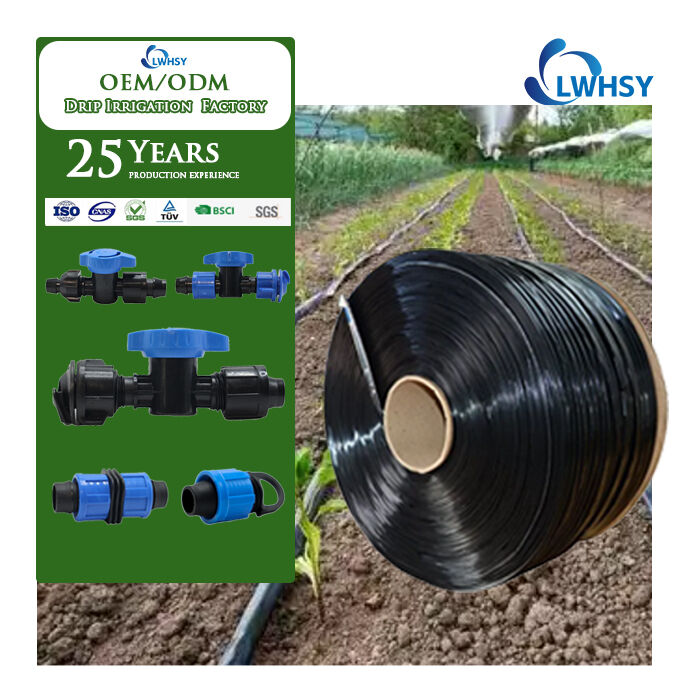
Agriculture accounts for approximately 70% of global freshwater consumption, placing unprecedented pressure on water resources as climate variability intensifies and populations grow. Water-saving irrigation represents a fundamental shift in how farmers manage this precious resource, moving from traditional flood methods to precision delivery systems that minimize waste while maximizing crop productivity. This evolution in agricultural water management combines engineering innovation with agronomic science to address one of the most pressing challenges facing modern farming: producing more food with less water.
The transition to water-saving irrigation is no longer optional for progressive farming operations. Water scarcity affects over 40% of the global population, and agricultural regions face increasing competition from urban and industrial users. Beyond conservation imperatives, water-saving irrigation delivers measurable economic benefits through reduced pumping costs, improved fertilizer efficiency, and enhanced crop quality. Understanding what constitutes water-saving irrigation and recognizing its critical role in sustainable agriculture helps farmers make informed decisions about system investments that will define their operational viability for decades to come.
Core Components and Technologies Behind Water-Saving Irrigation
Drip Irrigation Systems as the Foundation of Water Conservation
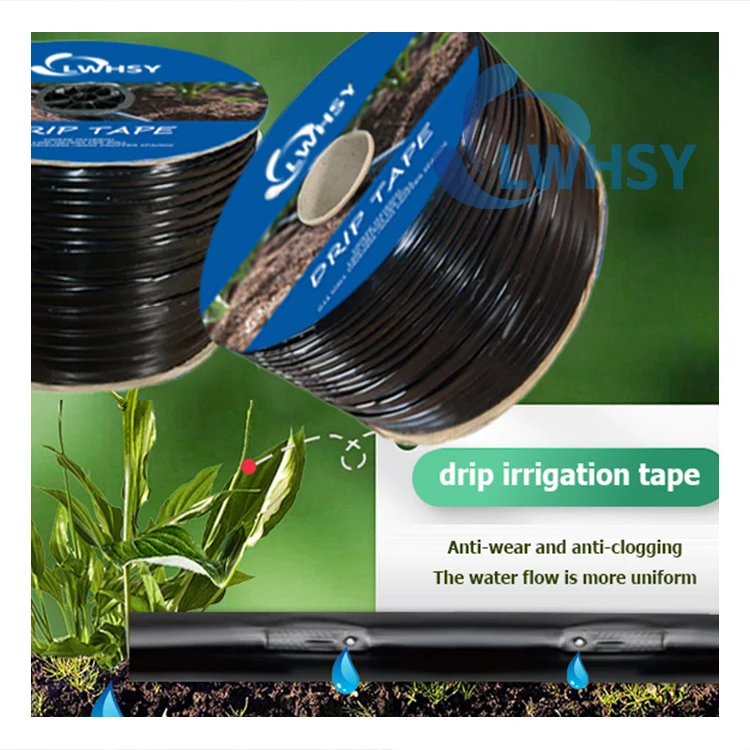
Drip irrigation stands as the most efficient water-saving irrigation technology available to commercial farmers, delivering water directly to plant root zones through a network of tubes, pipes, and emitters. This method achieves water application efficiencies of 85-95%, compared to 50-70% for traditional sprinkler systems and as low as 40% for surface flooding. The precision of drip systems eliminates runoff, reduces evaporation losses, and ensures that every drop reaches its intended target. Modern drip tape configurations incorporate pressure-compensating emitters that maintain uniform water distribution across varied topography and pipe lengths.
The engineering behind effective drip systems involves careful consideration of emitter spacing, flow rates, and pressure regulation. Agricultural drip tape typically features emitter spacings ranging from 20 to 40 centimeters, with flow rates calibrated to soil infiltration characteristics and crop water requirements. Inline emitters are manufactured directly into the drip tape during extrusion, ensuring consistent quality and reducing installation labor. The lateral lines connect to main and submain distribution networks that deliver filtered water at optimal pressures, typically between 0.5 and 1.5 bar depending on field conditions and system design.
Micro-Sprinkler and Subsurface Systems for Specialized Applications
Micro-sprinkler technology extends water-saving irrigation principles to crops requiring larger wetted areas or those benefiting from overhead moisture delivery. These systems operate at lower pressures than conventional sprinklers, typically 1.5 to 2.5 bar, and feature specialized nozzles that distribute water in patterns matched to crop canopy dimensions. Micro-sprinklers prove particularly effective for tree crops, nurseries, and greenhouse operations where precise humidity control enhances plant health. Water savings of 30-50% compared to conventional overhead irrigation are routinely achieved while maintaining optimal growing conditions.
Subsurface drip irrigation represents the most advanced form of water-saving irrigation, installing drip lines beneath the soil surface at depths typically ranging from 15 to 45 centimeters. This approach virtually eliminates evaporation losses, prevents surface weed germination, and protects irrigation infrastructure from weather damage and field operations. Installation costs are higher than surface systems, but operational efficiency gains and system longevity of 15-25 years justify the investment for permanent crops and high-value annual production. Subsurface systems require careful filtration and periodic maintenance to prevent emitter clogging from root intrusion and soil particle infiltration.
Filtration and Water Treatment as Critical Infrastructure
Effective water-saving irrigation depends entirely on proper filtration systems that remove physical, chemical, and biological contaminants before water enters distribution networks. Screen filters handle primary filtration for most agricultural applications, removing particles down to 120-200 mesh sizes depending on emitter specifications. Media filters containing sand or crushed granite provide deeper cleaning for water sources with heavy sediment loads. Disc filters offer compact alternatives with excellent filtration performance and easy maintenance through manual or automatic backflushing mechanisms.
Water quality management extends beyond particle removal to address chemical and biological factors that affect emitter performance and system longevity. Iron and manganese oxidation create deposits that clog emitters even when filtered water appears clear. Chemical injection systems introduce acids to maintain optimal pH levels and prevent mineral precipitation, while chlorination controls algae and bacterial growth within pipes. Fertigation capability integrates seamlessly with water-saving irrigation infrastructure, allowing precise nutrient delivery synchronized with irrigation scheduling for maximum uptake efficiency and minimal environmental impact.
Water Conservation Mechanisms and Efficiency Principles
Eliminating Non-Beneficial Water Losses
Traditional irrigation methods lose substantial water volumes to evaporation, deep percolation beyond root zones, and surface runoff that never enters the soil profile. Water-saving irrigation systematically addresses each loss pathway through engineering design and operational management. Evaporation losses diminish dramatically when water is delivered at or below the soil surface rather than broadcast through the air. Drip emitter flow rates are calibrated to match soil infiltration capacity, preventing saturation that drives water below the active root zone where plants cannot access it.
Runoff elimination represents one of the most visible benefits of water-saving irrigation implementation. Surface flooding and furrow methods inherently generate runoff as water moves across fields with variable infiltration rates and micro-topography. This runoff carries not only water but dissolved fertilizers and pesticides, creating environmental contamination while wasting expensive inputs. Precision water application through drip or micro-irrigation keeps water within intended treatment zones, protecting water quality in adjacent streams and aquifers while capturing full value from agrochemical investments.
Matching Application Rates to Crop Water Demand
The fundamental principle underlying water-saving irrigation effectiveness is precise alignment between water application and actual crop evapotranspiration rates. Plants consume water through two distinct pathways: transpiration through leaf stomata to drive photosynthesis and evaporation from soil surfaces. Traditional irrigation applies water in large volumes at infrequent intervals, creating cycles of over-saturation followed by moisture stress. Water-saving irrigation enables frequent, small applications that maintain soil moisture within the optimal range for root uptake without waste.
Crop coefficients, which relate actual evapotranspiration to reference evapotranspiration calculated from weather data, guide irrigation scheduling in modern systems. These coefficients vary by crop species, growth stage, and canopy development, requiring dynamic adjustment throughout the growing season. Water-saving irrigation infrastructure provides the flexibility to modify application volumes and frequencies as crops mature and weather conditions change. This responsiveness prevents the over-irrigation that occurs when fixed schedules fail to account for rainfall events or cooler temperatures that reduce plant water demand.
Root Zone Moisture Management for Optimal Plant Performance
Water-saving irrigation transforms soil moisture management from crude approximation to precision science. Traditional methods flood the entire root zone and surrounding areas, creating anaerobic conditions that stress plants and promote disease while wasting water. Drip irrigation wets a limited soil volume around each emitter, typically 30-50 centimeters in diameter depending on soil texture and application duration. This focused wetting pattern encourages dense, fibrous root development near emitters where water and nutrients concentrate, improving plant access to resources.
Soil moisture sensors integrated with water-saving irrigation controllers enable real-time feedback loops that adjust irrigation based on actual field conditions rather than theoretical calculations. Tensiometers measure soil water tension, indicating how tightly water adheres to soil particles and how much energy plants must expend for uptake. Capacitance sensors detect volumetric water content at multiple depths, revealing whether irrigation penetrates to lower root zones. These data streams feed into automated control systems that trigger irrigation cycles only when moisture depletion reaches predetermined thresholds, eliminating guesswork and over-application.
Economic and Agronomic Benefits Driving Adoption
Direct Cost Savings Through Reduced Water and Energy Consumption
Water-saving irrigation delivers immediate economic returns through decreased water pumping requirements and associated energy costs. Reducing irrigation volumes by 40-60% compared to flood methods translates directly to proportional energy savings, a critical consideration as electricity and fuel prices escalate. For operations drawing from deep wells or requiring high-pressure pumping, energy costs often represent the largest component of irrigation expenses. The lower operating pressures required by drip systems, typically one-third to one-half of sprinkler system pressures, compound energy savings beyond those achieved through volume reduction alone.
Water pricing mechanisms increasingly reflect scarcity realities, with volumetric charges replacing flat-rate assessments in many agricultural regions. Water-saving irrigation insulates farming operations from rising water costs while building resilience against allocation cutbacks during drought periods. Some jurisdictions offer priority water access or preferential pricing to farmers demonstrating efficient irrigation practices, creating additional incentive layers. The return on investment for water-saving irrigation systems typically ranges from three to seven years depending on crop values, water costs, and available incentive programs, with systems providing reliable service for 15-25 years when properly maintained.
Yield Enhancement and Quality Improvement
Counter-intuitively, using less water through water-saving irrigation often increases crop yields while improving harvest quality. This paradox resolves when recognizing that traditional over-irrigation creates as much plant stress as under-irrigation. Waterlogged soils exclude oxygen from root zones, inhibiting nutrient uptake and promoting root diseases. Frequent irrigation cycles with smaller volumes maintain optimal moisture levels that maximize photosynthetic efficiency and nutrient availability throughout the growing season rather than subjecting plants to boom-and-bust moisture cycles.
Quality parameters commanding premium prices in many crops respond positively to water-saving irrigation management. Controlled moisture stress during fruit maturation concentrates sugars and improves flavor profiles in grapes, tomatoes, and stone fruits. Consistent moisture availability prevents cracking, splitting, and irregular sizing that downgrade produce value. Reduced foliar wetness from overhead irrigation decreases fungal disease pressure, lowering pesticide requirements and improving marketability. These quality improvements often contribute more to profitability than yield increases alone, particularly in specialty crop markets where appearance and taste directly affect pricing.
Labor Efficiency and Operational Flexibility
Automated water-saving irrigation systems reduce labor requirements by 60-80% compared to manually managed surface irrigation methods. Traditional furrow irrigation demands constant monitoring, gate adjustments, and field checks to prevent overflows and ensure uniform coverage. Modern drip systems with programmable controllers operate unattended for days or weeks, freeing skilled labor for higher-value activities like pest scouting and harvest management. Remote monitoring through cellular or satellite connectivity enables oversight of multiple field locations from central offices or even mobile devices.
The operational flexibility provided by water-saving irrigation extends planting windows and enables production on marginal lands previously unsuitable for agriculture. Precise water delivery allows cultivation of slopes and irregular terrain where surface methods fail to achieve uniform distribution. Fields can be irrigated during windy conditions that disrupt sprinkler uniformity, and nighttime irrigation reduces evaporative losses without requiring labor during premium daytime hours. This scheduling flexibility proves invaluable during peak seasons when labor and equipment face competing demands across farming operations.
Environmental Sustainability and Resource Stewardship
Aquifer Protection and Groundwater Recharge
Excessive groundwater extraction for inefficient irrigation has lowered water tables across major agricultural regions worldwide, threatening long-term production sustainability. Water-saving irrigation directly addresses this crisis by reducing extraction volumes while maintaining or increasing agricultural output. Studies across diverse climatic zones document groundwater pumping reductions of 30-50% following conversion from flood to drip irrigation, allowing aquifer recovery even as cultivated areas expand. This conservation effect multiplies across watersheds as adoption spreads, stabilizing regional water resources for agricultural and non-agricultural users alike.
The reduced deep percolation characteristic of water-saving irrigation also protects groundwater quality by minimizing nutrient and pesticide leaching. Traditional over-irrigation flushes soluble chemicals below root zones into aquifers, contaminating drinking water sources and creating long-term remediation challenges. Precise water application matched to crop uptake capacity keeps agricultural inputs in the active soil profile where plants utilize them, preventing environmental contamination while improving input efficiency. This environmental protection assumes growing importance as regulatory frameworks tighten restrictions on agricultural chemical applications and non-point source pollution.
Soil Health Preservation and Salinity Management
Water-saving irrigation practices preserve and enhance soil structure through mechanisms that extend beyond simple water conservation. Traditional flooding compacts soil through prolonged saturation and surface crusting as fine particles redistribute during drying. Drip irrigation maintains friable soil structure by avoiding saturation, preserving macropore networks essential for root penetration, oxygen exchange, and beneficial soil organism activity. This structural preservation reduces erosion vulnerability and maintains infiltration capacity over time, creating positive feedback loops that improve water-saving irrigation effectiveness.
Salinity management represents a critical application for water-saving irrigation in arid and semi-arid regions where mineral accumulation threatens soil productivity. Strategic leaching through carefully controlled water applications moves salts below root zones without the excessive water volumes required by flood leaching. Continuous moisture maintenance through frequent drip irrigation prevents the capillary rise that concentrates salts in surface horizons as soils dry. The localized wetting patterns created by water-saving irrigation establish salt distribution gradients with lower concentrations near emitters where roots concentrate, enabling production on saline soils that would fail under conventional irrigation regimes.
Ecosystem Impact Reduction and Biodiversity Support
Agricultural water extraction affects entire ecosystems by reducing streamflows, lowering wetland water levels, and disrupting aquatic habitats. Water-saving irrigation lessens these impacts by returning substantial water volumes to environmental flows rather than diverting them to crop production. Regional water budgets demonstrate that widespread adoption of efficient irrigation technologies can restore ecological functions in degraded watersheds while supporting continued agricultural productivity. This dual outcome proves essential for balancing food security with environmental conservation in water-limited regions.
The precision of water-saving irrigation reduces off-target impacts that harm non-crop biodiversity. Eliminating runoff prevents sediment and agrochemical transport into adjacent natural areas, protecting sensitive species from contamination. Reduced field wetness decreases mosquito breeding habitat and disease vector populations, lessening pesticide pressure on beneficial insects and wildlife. Dry field surfaces between drip lines allow ground-nesting birds and small mammals to utilize agricultural landscapes, supporting biodiversity conservation objectives within working lands. These ecological benefits enhance agriculture's social license to operate while generating ecosystem services that support long-term productivity.
Implementation Considerations for Modern Farming Operations
System Design Matched to Crop Requirements and Field Conditions
Successful water-saving irrigation implementation begins with comprehensive system design that accounts for crop physiology, soil characteristics, water source reliability, and topographic constraints. Different crops demand distinct approaches: row crops benefit from buried drip tape replaced annually or biennially, while permanent orchards justify heavy-wall drip tubing designed for decade-long service life. Emitter spacing and flow rates must align with plant spacing and root architecture, with closer emitter spacing required in sandy soils where lateral water movement is limited compared to clay soils where wider spacing suffices.
Field topography significantly influences system design, particularly regarding pressure regulation and zoning requirements. Elevation changes exceeding 3-5 meters within irrigation blocks necessitate pressure compensating emitters or zone valves to maintain uniform water distribution. Water source capacity and quality dictate filtration requirements, pump sizing, and treatment infrastructure investments. Professional hydraulic design ensures that pipe networks deliver adequate flow to all field sections without excessive pressure losses or velocities that cause premature component wear. These upfront design investments prevent costly retrofits and performance problems that plague improperly engineered systems.
Economic Analysis and Financing Strategies
Water-saving irrigation represents a significant capital investment requiring careful financial planning and analysis. Total installed costs typically range from $1,500 to $4,000 per hectare depending on system sophistication, field conditions, and regional labor rates. Economic feasibility depends on multiple factors including water costs, crop values, existing infrastructure, and available incentive programs. Detailed return-on-investment calculations should account for energy savings, yield improvements, quality premiums, and labor reductions rather than focusing solely on water cost savings in regions where water remains inexpensive.
Government conservation programs, agricultural development banks, and equipment suppliers increasingly offer financing mechanisms that reduce upfront capital barriers to water-saving irrigation adoption. Cost-share programs subsidize 30-60% of installation expenses in many regions, recognizing the public benefits of agricultural water conservation. Equipment leasing arrangements spread costs across multiple growing seasons, aligning payments with revenue generation. Some irrigation suppliers offer performance-based financing where payments adjust based on measured water savings, sharing risk between farmers and technology providers while incentivizing optimal system design and support.
Training Requirements and Management Skill Development
Transitioning to water-saving irrigation demands new management skills and operational understanding beyond traditional irrigation experience. Farmers and irrigation managers require training in system operation, maintenance protocols, scheduling methodologies, and troubleshooting procedures. Understanding hydraulic principles, filtration management, and fertigation techniques becomes essential for optimizing system performance. Many farmers underutilize water-saving irrigation capabilities by operating sophisticated systems with flood irrigation mentalities, applying water on fixed schedules rather than responding to crop needs and environmental conditions.
Extension services, equipment suppliers, and irrigation associations provide educational resources supporting successful adoption. Demonstration farms showcase properly implemented systems and allow farmers to observe performance under local conditions before committing to investments. Irrigation scheduling tools and decision support software help translate weather data and crop requirements into practical application schedules. Peer learning networks connect experienced water-saving irrigation users with newcomers, facilitating knowledge transfer and troubleshooting support. This educational infrastructure proves as critical as hardware investments for achieving the full potential of water-saving irrigation technologies.
FAQ
How much water can farmers actually save by switching to water-saving irrigation systems?
Water savings from properly designed and managed water-saving irrigation systems typically range from 30% to 60% compared to traditional flood or furrow irrigation methods, with the exact amount depending on soil type, crop selection, climate conditions, and baseline irrigation practices. Drip irrigation systems generally achieve the highest efficiency at 85-95%, compared to 50-70% for conventional sprinkler systems and 40-60% for surface irrigation. These efficiency improvements translate directly to reduced pumping volumes, though actual water savings also depend on operational management and maintenance quality. Farmers transitioning from relatively efficient sprinkler systems to drip irrigation see smaller percentage reductions than those converting from flood irrigation, but even modest efficiency gains generate significant water and energy savings when applied across large acreages.
What maintenance does water-saving irrigation equipment require to maintain performance?
Water-saving irrigation systems require regular maintenance focused primarily on filtration system cleaning, emitter inspection, and system flushing to prevent clogging and ensure uniform water distribution. Filter backwashing should occur according to pressure differential indicators or on fixed schedules, typically ranging from daily to weekly depending on water quality. Drip lines require periodic flushing by opening end caps to remove accumulated sediment, with frequency determined by water quality and system age. Chemical treatments to control algae and mineral precipitation may be necessary monthly or seasonally based on water analysis results. Annual maintenance includes checking for leaks, repairing damaged components, inspecting pressure regulators and valves, and replacing worn emitters or drip tape sections. Systems with automation components require battery replacement, sensor calibration, and controller programming updates. While maintenance requirements exceed those of simple flood systems, the labor investment remains modest compared to operational cost savings and performance benefits when following manufacturer recommendations and preventive maintenance schedules.
Can water-saving irrigation systems work effectively in all soil types and climates?
Water-saving irrigation systems function effectively across virtually all soil types and climatic conditions when properly designed for local circumstances, though specific system configurations and management approaches must adapt to environmental factors. Sandy soils with rapid drainage require closer emitter spacing and more frequent irrigation cycles with smaller volumes to maintain adequate root zone moisture, while clay soils allow wider spacing and less frequent applications. Extremely heavy clay soils may need modified emitter flow rates to prevent surface ponding and runoff. Arid climates benefit most dramatically from water-saving irrigation due to high evaporation rates under traditional methods, but humid regions also achieve meaningful water savings and gain disease management benefits from reduced foliar wetness. Cold climates require winterization procedures including system drainage and protection from freeze damage, while tropical environments may need enhanced filtration to manage biological growth in water sources. System design expertise that accounts for these local variables ensures that water-saving irrigation delivers promised benefits regardless of geographic location or environmental conditions.
Is water-saving irrigation only suitable for large commercial farms or can small-scale farmers benefit as well?
Water-saving irrigation technologies scale effectively from small family farms to large commercial operations, with system designs and equipment options available for virtually any farm size or budget level. Small-scale farmers often achieve proportionally greater benefits than large operations because water and labor constraints more severely limit their production potential. Low-cost drip tape systems suitable for plots as small as 0.1 hectare are widely available, with complete kits including filters, pressure regulators, and connectors priced affordably for smallholder budgets. Gravity-fed systems eliminate pumping costs for farmers with elevated water sources, further reducing capital requirements. Many agricultural development programs specifically target small-scale farmers with subsidized water-saving irrigation equipment and training, recognizing the technology's potential to improve food security and rural livelihoods. Cooperative purchasing arrangements and shared equipment reduce individual investment burdens while maintaining access to efficiency benefits. The key difference lies in system sophistication rather than fundamental viability, with small farms using simpler designs and manual operation while large operations justify automated controls and remote monitoring infrastructure.
Table of Contents
- Core Components and Technologies Behind Water-Saving Irrigation
- Water Conservation Mechanisms and Efficiency Principles
- Economic and Agronomic Benefits Driving Adoption
- Environmental Sustainability and Resource Stewardship
- Implementation Considerations for Modern Farming Operations
-
FAQ
- How much water can farmers actually save by switching to water-saving irrigation systems?
- What maintenance does water-saving irrigation equipment require to maintain performance?
- Can water-saving irrigation systems work effectively in all soil types and climates?
- Is water-saving irrigation only suitable for large commercial farms or can small-scale farmers benefit as well?