
 EN
EN
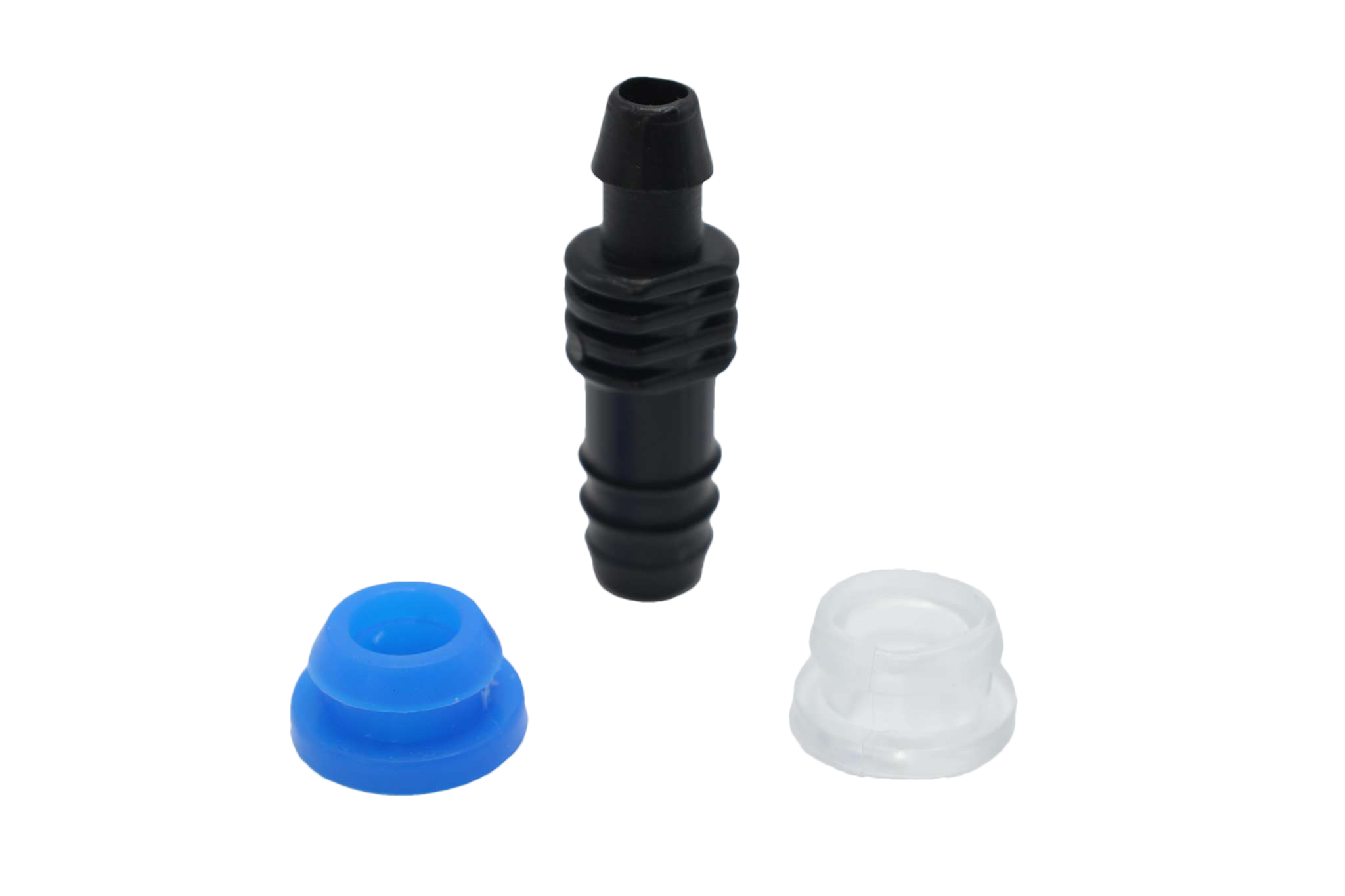
Why Direct Insertion Connectors Are Ideal for Modern Irrigation Applications
Direct insertion connectors offer real efficiency gains and solid durability when installing PE pipes in irrigation systems. They cut down on installation time by roughly half compared to older methods, and last just as long too. Traditional approaches like threading or socket fusion require all sorts of special equipment including welding tools, hot plates, and chemical glues. None of that matters with these connectors, which makes them much faster to install for both farmers working their fields and technicians doing maintenance work. The barbed seal creates a tight connection right away with PE80 and PE100 pipes. This stops roots from getting inside and keeps water pressure stable throughout the system, even when installed underground where conditions can be tough on regular connections.
The structural strength comes right from how it's designed. When pressure builds up, it spreads out across the whole pipe wall instead of gathering at one spot where leaks usually happen. Tests done by the USDA show this cuts down on leaks by around 73% when compared to those old compression fittings everyone used before. And that matters a lot for saving water, particularly in areas that struggle with dry seasons year after year. Water just slowly trickles away through connections made with traditional methods, but not anymore. There are no complicated moving pieces here either, and absolutely no need for those chemical glues that always seem to cause problems later on. Maintenance becomes way less of a headache overall. The system works great with ASTM F2620-22 standards too, so it performs reliably on pipes ranging from 40mm all the way up to 125mm in size. Farmers and irrigation specialists looking ahead know this means their systems will keep working well even as requirements change over time.
Step-by-Step Installation Guide for Direct Insertion Connectors on PE Pipes
Pre-Installation Essentials: Pipe Ovality, Surface Prep, and Temperature Considerations
Check the shape of the pipe first with good quality calipers. For PE80 pipes specifically, they need to stay pretty round with no more than 3% out of round according to ASTM F2620-22 standards. Next up, wipe down the pipe surface properly using industrial strength isopropyl alcohol. This gets rid of all that pesky dust, greasy stuff, and leftover dirt that could mess things up later. Give the area where it goes into place a light scoring with a deburring tool too. Without doing this, the fit might be rough and uneven when connecting. Temperature really matters here folks. If it's colder than 5 degrees Celsius outside, there's a higher chance of cracks forming during installation. On the flip side, anything hotter than 30 degrees can lead to pipes expanding too much which creates problems down the line. Let those pipes sit undisturbed for about two hours somewhere shady and stable before trying to connect them together.
Field-Verified Procedure: Installing on 63mm PE80 Irrigation Mainline (ASTM F2620-22 Compliant)
- Mark insertion depth – Measure and mark 1.5 times the connector’s length (e.g., ~65mm for standard 63mm-compatible fittings).
- Align and insert – Hold the connector perpendicular to the pipe axis and apply steady, even pressure until the internal stop contacts the pipe end.
- Secure connection – Rotate the fitting 90° after full insertion to engage the o-ring seal; resistance at the quarter-turn confirms proper locking.
- Pressure test – Conduct a 48-hour hydrostatic test at 1.5— system operating pressure. A pressure drop of less than 0.1% indicates full seal integrity.
Critical reminder: Partial insertion accounts for 78% of premature leaks in irrigation connectors (AWWA 2022).
Performance Comparison: Direct Insertion vs. Socket-Fit and Other PE Pipe Connection Methods in Irrigation
Choosing the right way to connect polyethylene (PE) pipes really affects how well an irrigation system works over time. Socket fusion makes strong molecular connections that hold up under pressure, which is why it's often used in city water systems. Compression fittings give some flexibility but don't last as long. For farms and fields though, direct insertion connectors seem to work best overall. They install quickly, handle changes in the field without much hassle, and keep performing reliably season after season. Most farmers find these connectors strike just the right balance between getting the job done fast and lasting through multiple growing cycles.
Leak Resistance and Long-Term Reliability Data for Drip and Sprinkler Systems
In low-pressure drip systems (10–25 PSI), direct insertion connectors achieve annual leak rates under 0.5%, thanks to stainless-steel grip rings and EPDM seals that actively compensate for thermal expansion and contraction. Compression fittings, by contrast, suffer 3–5— higher failure rates under repeated thermal cycling due to gasket compression loss and thread creep.
For higher-pressure sprinkler systems (40–80 PSI), socket-fusion joints remain the gold standard for longevity—but require certified operators, power sources, and dedicated equipment. Direct insertion alternatives match 97% five-year leak-free performance in USDA field trials while enabling rapid, tool-free field repairs without cutting or re-fusing pipe. Key durability advantages include:
- Chemical resistance: Superior tolerance to fertilizers and agrochemicals versus solvent-cemented joints
- Surge resilience: Maintains seal integrity during hydraulic transients common at zone transitions
- Soil movement adaptation: Flexible sealing elements absorb ground settlement and lateral shift without joint fatigue
The table below summarizes comparative performance across core metrics:
| Connection Method | Avg. Leak Rate (Drip) | 5-Yr Reliability (Sprinkler) | Maintenance Frequency |
|---|---|---|---|
| Direct Insertion | 0.2–0.8% | 95–97% | None |
| Socket-Fusion | 0.1–0.3% | 98–99% | None |
| Compression Fittings | 1.5–4.2% | 82–87% | Annual retightening |
The numbers don't lie when it comes to direct insertion fittings for agricultural irrigation systems, especially with those PE80 and PE100 pipes ranging from 40 to 110mm in diameter. What makes this method stand out is the mechanical locking system that keeps everything firmly in place even in loose sandy ground or areas where the soil shifts around. Farmers no longer have to worry about common failures like glue breaking down over time, threads rusting away, or inconsistent results from fusion joints that depend so much on how skilled the operator happens to be at the moment.
FAQ
What are direct insertion connectors?
Direct insertion connectors are fittings used to connect polyethylene (PE) pipes in irrigation systems. They simplify the installation process by eliminating the need for special tools and equipment like welding tools and chemical glues.
Why are direct insertion connectors preferable over traditional methods?
They offer significant installation efficiency by reducing setup time and eliminating the use of potentially damaging chemical glues. They also enhance durability and perform well under pressure, reducing leaks by up to 73% compared to compression fittings.
How does the installation process work for direct insertion connectors?
It involves marking the insertion depth, properly aligning the connector, applying pressure for insertion, securing the connection with a quarter-turn to engage seals, and then pressure testing the system to ensure a tight seal.
What standards do these connectors comply with?
Direct insertion connectors comply with ASTM F2620-22 standards, making them suitable for various PE pipe sizes ranging from 40mm to 125mm.
How do direct insertion connectors perform compared to other methods?
They are highly leak-resistant and reliable, matching the leak-free performance of socket-fusion joints over five years, with easier installation and maintenance. They are particularly effective in adapting to thermal expansion, soil movement, and hydraulic surges.
Table of Contents
- Why Direct Insertion Connectors Are Ideal for Modern Irrigation Applications
- Step-by-Step Installation Guide for Direct Insertion Connectors on PE Pipes
- Performance Comparison: Direct Insertion vs. Socket-Fit and Other PE Pipe Connection Methods in Irrigation
-
FAQ
- What are direct insertion connectors?
- Why are direct insertion connectors preferable over traditional methods?
- How does the installation process work for direct insertion connectors?
- What standards do these connectors comply with?
- How do direct insertion connectors perform compared to other methods?