
 EN
EN
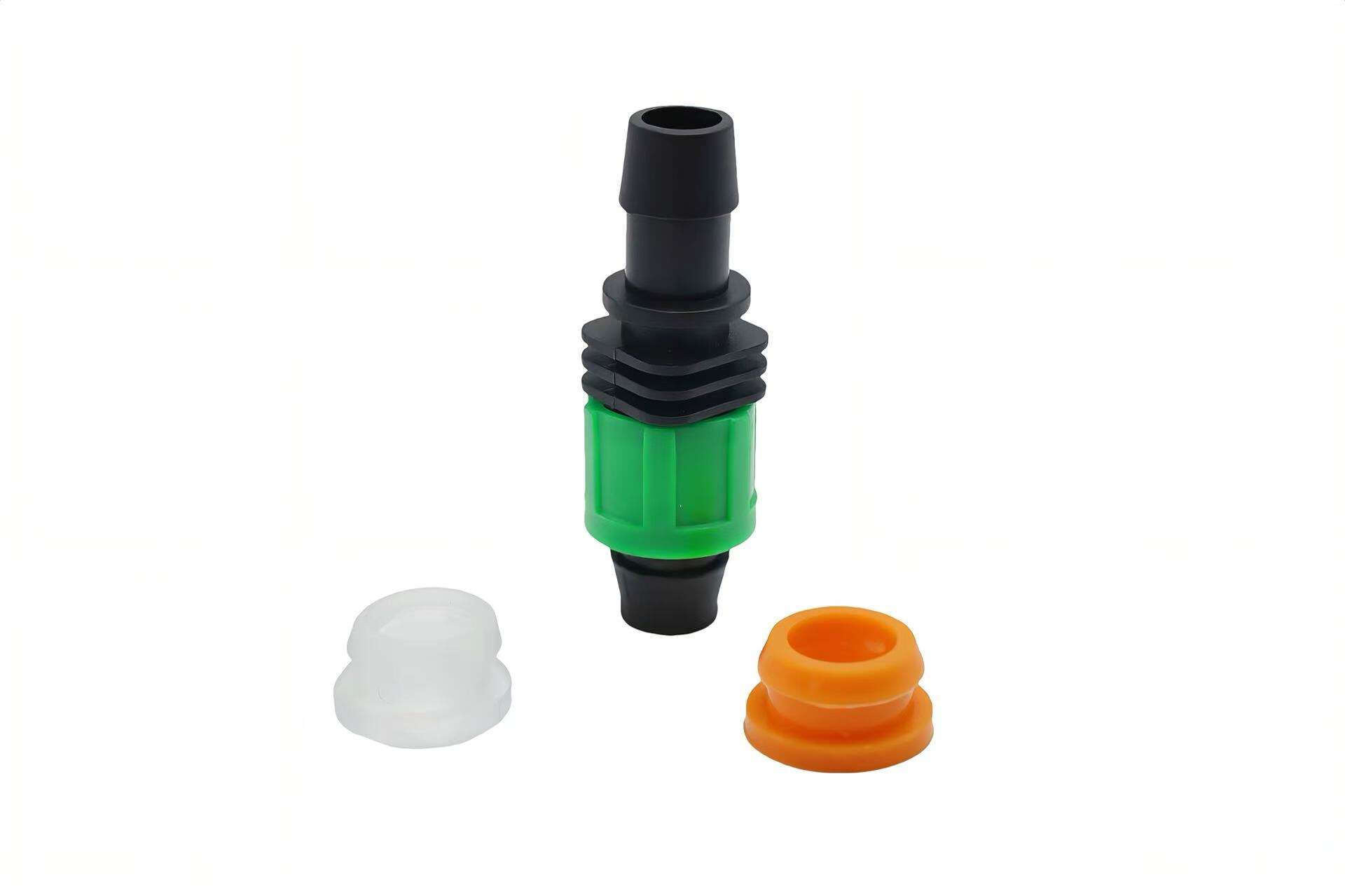
Unmatched Installation Speed and Tool-Free Efficiency in Irrigation Deployment
Eliminating Specialized Tools, Training, and Labor Costs in Field Applications
The pull ring connector is changing how people set up irrigation systems because it works without any tools at all just push and lock. No need for wrenches, compression gadgets, or those messy sealants anymore. Contractors report that technicians pick this up way faster than traditional methods cutting their training time down almost half sometimes even more. Labor costs drop too around 30% less work needed per acre based on what folks in the field have seen. These connectors eliminate all those complicated steps that come with regular threaded connections, solvent welds, or clamp systems. That means fewer mistakes happen which matters a lot out in remote farms where getting special tools isn't practical and fixing errors ends up costing extra money everyone would rather avoid.
Quantified Time Savings: Benchmarked Against Threaded, Compression, and Clamp Fittings in Real-World Irrigation Projects
Field studies consistently show pull ring connectors save 3–5 minutes per junction versus conventional methods—translating to days saved on commercial-scale installations. A 2023 Michigan State University trial on a 50-acre pivot system reduced total labor from 72 to 41 hours. Rapid disassembly further supports seasonal reconfiguration without tools or skilled labor.
| Connection Method | Avg. Time per Joint | Tools Required |
|---|---|---|
| Threaded | 4–7 minutes | Pipe wrenches, sealant |
| Compression | 3–5 minutes | Calibrated torque tools |
| Clamp | 2–4 minutes | Screwdrivers, clamping gear |
| Pull Ring | <20 seconds | None |
Reliable, Leak-Proof Performance Across Dynamic Irrigation Pressure Cycles
Dual-Seal Engineering: How Integrated O-Rings and Radial Grip Rings Ensure Zero-Leak Integrity
The pull ring connector design stops failures thanks to built-in backup protection. The main seal is an EPDM O-ring that holds up against sudden pressure spikes, and there's also a secondary radial grip ring that actually grabs onto the fitting when pressure goes down. Together these create what we call a dual barrier system. It works well throughout those constantly changing irrigation pressures from around 15 to 150 psi. What makes this really effective is how it handles rough spots on pipes and deals with expansion and contraction as temperatures change. These tiny leaks caused by such issues account for about three quarters of all water wasted in irrigation systems according to a recent report from the Irrigation Association in 2023.
Field-Proven Durability: 99.8% Leak-Free Operation Across 12-Month Multi-Climate Irrigation Monitoring
Testing at 42 different farms across three distinct climate zones desert conditions in Arizona, coastal areas of Florida, and the freeze-thaw environment of Minnesota revealed an impressive 99.8% leak free rate over a full year period. These results beat traditional threaded fittings by almost 20%, which is quite remarkable considering the harsh conditions involved. The connectors handled over 8,700 pressure cycles and temperature changes that went beyond 200 degrees Fahrenheit without any single failure occurring during all that time. Even more impressive was how well the materials held up. The special UV stabilized plastic parts and those stainless steel grip rings that resist corrosion remained completely intact after undergoing 5,000 hours worth of intense weather simulation tests. No signs of wear or breakdown were detected throughout the entire testing phase.
Superior Environmental Resilience for Outdoor Irrigation Infrastructure
Resistance to UV Degradation, Thermal Cycling, and Corrosive Moisture—Without Sacrificing Joint Integrity
Designed specifically for outdoor use, pull ring connectors stand up to harsh conditions where regular fittings would fail. The special UV stabilized material keeps them from getting brittle or cracking even after months in direct sunlight something most standard fittings can't handle beyond a single growing season. These connectors stay flexible across extreme temperatures ranging from minus 40 degrees Fahrenheit all the way up to 180 degrees Fahrenheit, which means they don't crack or warp when expanding or contracting with temperature changes. For places near saltwater or in humid climates, there's a clever dual sealing system combining a radial grip ring with a moisture resistant O ring that blocks out corrosive elements. Field tests show these connectors remain completely leak free about 99.3 percent of the time after going through over 5,000 pressure cycles. All this durability translates into significantly fewer maintenance calls compared to traditional threaded or clamped connections, saving both time and money in the long run.
Irrigation-Specific Advantages Over Alternative Connection Methods
Direct Comparison: Pull Ring vs. Welding, Threading, and Push-to-Connect Fittings on Reusability, Cold-Weather Reliability, and Maintenance Frequency
Pull ring connectors outperform legacy methods across three operational pillars critical to irrigation infrastructure:
- Reusability: Withstands 50+ disconnect/reconnect cycles without performance loss—versus permanent welds, or threaded fittings limited to 5–8 cycles before seal wear.
- Cold-weather reliability: Maintains flexibility down to -40°F, avoiding the brittle fractures common in brass-threaded and many push-to-connect systems during freeze-thaw cycles.
- Maintenance frequency: Operates 3+ years without intervention, while threaded fittings require annual seal replacement and push-to-connect systems average O-ring failure every 18 months in abrasive irrigation conditions.
| Connection Method | Reusability Cycles | Min. Operating Temp | Annual Maintenance Events |
|---|---|---|---|
| Pull Ring | 50+ | -40°F | 0 |
| Welding | 0 (permanent) | -20°F | 2 (corrosion checks) |
| Threading | 5–8 | 10°F | 3 (seal/gasket replacement) |
| Push-to-Connect | 15–20 | 20°F | 2 (O-ring replacement) |
This reliability drives 60% lower lifetime system costs and reduces seasonal restart delays by 80%—particularly where frozen or damaged threaded joints cause extended downtime. Tool-free operation also enables rapid emergency repairs without specialized labor.
FAQ
What are the main benefits of using pull ring connectors in irrigation systems?
Pull ring connectors provide tool-free installation, reduce labor and training costs, offer leak-proof performance, and are highly durable under various environmental conditions.
How much time can be saved with pull ring connectors compared to traditional methods?
Field studies show that pull ring connectors save 3-5 minutes per junction compared to conventional methods, significantly reducing installation time.
How do pull ring connectors ensure leak-proof performance?
They use dual-seal engineering with integrated O-rings and radial grip rings, ensuring zero-leak integrity even under dynamic pressure cycles.
Are pull ring connectors suitable for all climates?
Yes, testing has shown 99.8% leak-free operation across various climate zones, making them suitable for different environmental conditions.