
 EN
EN
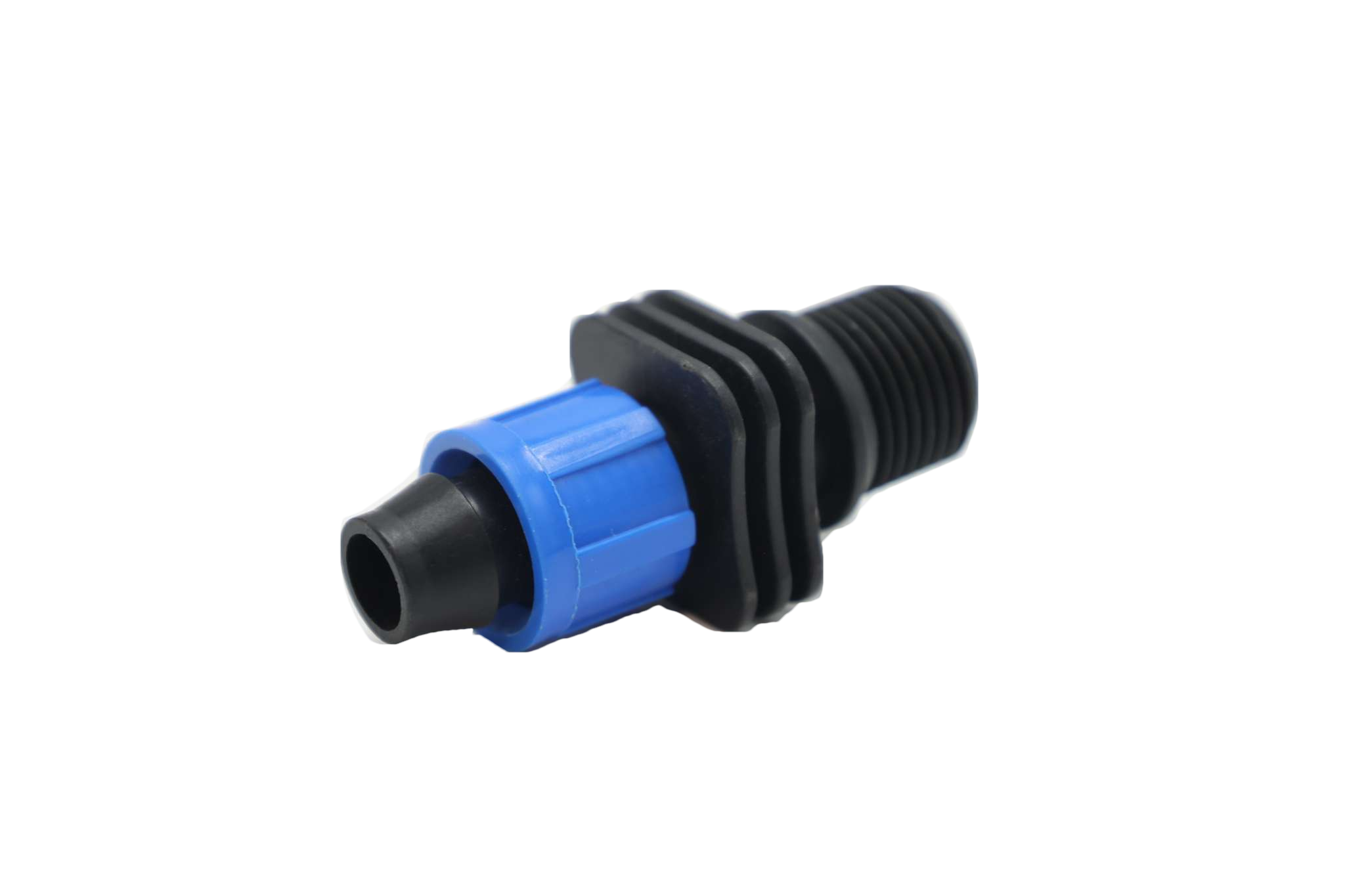
How Pull Ring Connectors Work: Mechanism and Core Components
Tool-Free Engagement: The Pull-Ring Actuation Principle
The pull ring connector works pretty straightforwardly. Just pull back on that ring to unlock the fitting, push the irrigation tubing all the way in until it stops, then let go of the ring so it clicks into place creating a self-sealing connection right away. No tools needed here, which means no worries about cross threading that happens so often with regular threaded fittings. People who install these things report saving around two thirds of their time compared to old school methods. Inside there's this spring loaded collet thing that keeps pressing against the tube from all sides, holding everything tight even when there are vibrations or sudden pressure spikes as high as 250 pounds per square inch. Farmers and maintenance folks out in the fields can usually make a connection in less than five seconds flat. That kind of speed really matters when fixing leaks in the middle of harvest season or rearranging sprinkler systems before planting time on big farms.
Critical Internal Elements—Collets, Spurs, and Tube Supports—for Leak-Resistant Sealing
Three precision-engineered components work in concert to deliver robust, leak-resistant performance:
- Stainless-steel collets grip the tubing exterior with fine teeth, preventing pull-out under dynamic loads
- Anti-kink spurs ensure concentric alignment of the tube within the fitting, eliminating flow-restricting bends
- Dual-durometer tube supports dampen vibration while accommodating thermal expansion and contraction
Compression molded EPDM O rings form the main seal, designed to stay elastic over time even when temperatures swing from minus 40 degrees all the way up to 180 degrees Fahrenheit. When pressure builds up inside the system, hydraulic force pushes these rings harder against the tube walls creating what engineers call a self reinforcing seal effect. The more pressure there is, the better the seal actually gets. Tests done by third party labs show absolutely no leaks after going through 10 thousand complete thermal cycles. This means the seals hold up incredibly well in actual irrigation systems where temperatures change dramatically day after day throughout seasons.
Why Pull Ring Connectors Excel in Agricultural Irrigation Environments
Agricultural settings impose extreme operational demands—dust storms, chemical-laden mud, and frequent high-pressure washdowns. Pull ring connectors meet these challenges through purpose-built engineering, delivering consistent uptime and reduced maintenance burden.
IP67/IP69K Ratings: Protection Against Dust, Mud, and Field Washdowns
Pull ring connectors meet both IP67 and IP69K standards, which are considered the top marks for environmental protection in irrigation systems. The IP67 rating means they keep out all dust and can handle being submerged temporarily about a meter deep for half an hour. For IP69K, these connectors stand up to intense cleaning conditions including steam at temperatures reaching around 145 degrees Celsius and pressure levels hitting 100 bar. What does this actually mean on site? Well, it basically ensures that these connectors will perform reliably even when faced with harsh weather conditions or rigorous maintenance protocols common in agricultural settings.
- No downtime from debris clogging pivot mechanisms or drip emitters
- Uninterrupted function during flood irrigation or heavy rainfall
- Reliable resealing after aggressive mud removal via pressure washers
This dual-rated defense prevents the most common failure mode of legacy threaded fittings: contaminant intrusion at the sealing interface.
UV-Stable Materials and O-Ring Resilience Under Thermal Cycling and Long-Term Exposure
Unlike standard plastics, pull ring connectors use UV-inhibited polymers and EPDM elastomers specifically formulated for continuous outdoor service. Together, they resist degradation from:
- Extreme diurnal temperature swings—from freezing nights to desert-day heat
- Prolonged solar exposure without embrittlement or surface cracking
- Oxidizing agrochemicals including fertilizers and pesticides
Accelerated weathering tests show UV-stabilized housings retain over 95% of original tensile strength after 5,000 hours—equivalent to more than five years of full-sun exposure. EPDM seals maintain functional elasticity across -40°C to +130°C, ensuring dependable sealing season after season.
Irrigation-Specific Advantages: Speed, Reliability, and Field Serviceability
Labor and Time Savings vs. Threading, Solvent Cementing, or Heat Fusion
Pull ring connectors cut out all the hassle of threading tools, waiting for solvent cement to cure, or dealing with heat fusion equipment. Labor savings can be around 80% compared to traditional threaded systems. The connections themselves are super easy just grab and release, which makes things go much faster whether setting something up from scratch or fixing an urgent problem. Take sprinkler lateral installations for instance they take mere seconds rather than minutes per joint as is the case with solvent cemented PVC pipes. This kind of speed really adds up across a whole project.
Rapid Reconfiguration for Seasonal Layout Changes and Repair-Driven Downtime Reduction
When dealing with crop rotations, replacing emitters, or responding to leaks, farmers need something flexible. Pull ring connectors let them disconnect and reseal quickly without needing any tools at all. According to field tests, changing out a 50 zone center pivot system only takes around two hours with these fittings compared to the usual eight hours needed for standard couplings. That kind of time savings really matters during those crucial irrigation periods, particularly when trying to fix dry spots in fields during droughts. The materials used are UV stabilized too, so they hold up through multiple seasons of taking apart and putting back together again without breaking down or losing their seal quality over time.
Sizing, Compatibility, and Integration Across Common Irrigation Tubing
Getting the right size and compatible materials is absolutely essential when setting up reliable irrigation systems. When connectors don't match properly, they create problems like restricted water flow, buildup of sediment, and annoying leaks that account for about 41 percent of all reported irrigation system failures according to industry data from last year. Even a small mistake matters big time. We saw a real world example where someone lost around $29,000 worth of crops because their coupling was just 1.125 mm off in outer diameter. Matching the exact outer diameter between tubes and couplings becomes really important since different plastics like PVC, polyethylene, and HDPE vary quite a bit in dimensions. Brass fittings generally work best under high pressure situations, whereas those compression style couplers tend to perform better with flexible tubing options. For connecting different sizes together without messing up the pressure balance or water flow consistency, adapters come in handy. Check out the table below for some basic compatibility rules to follow:
| Tubing Material | Nominal Size | Actual OD | Ideal Coupler Type |
|---|---|---|---|
| PVC | 3/4-inch | 1.050 in | Size-specific |
| Polyethylene | 1/2-inch | 0.710 in | Compression |
| HDPE | 25mm | 1.181 in | Brass |
Always verify actual tubing OD before selection—gaps exceeding 0.049 inches risk seal failure under field pressure and vibration.
FAQs
What are pull ring connectors used for?
Pull ring connectors are primarily used in agricultural irrigation systems to create quick, tool-free connections between irrigation tubes, ensuring a self-sealing connection and significant time savings during installation.
How do pull ring connectors handle extreme weather conditions?
Pull ring connectors are built to withstand extreme weather conditions due to their IP67/IP69K ratings. They offer protection against dust and mud and can endure temporary submersion and high-pressure washdowns.
Why is compatibility important for pull ring connectors?
Compatibility is crucial because connecting tubing and couplings with incompatible sizes or materials can lead to restricted water flow, sediment buildup, and leaks, making irrigation systems less efficient and potentially leading to crop losses.