
 EN
EN
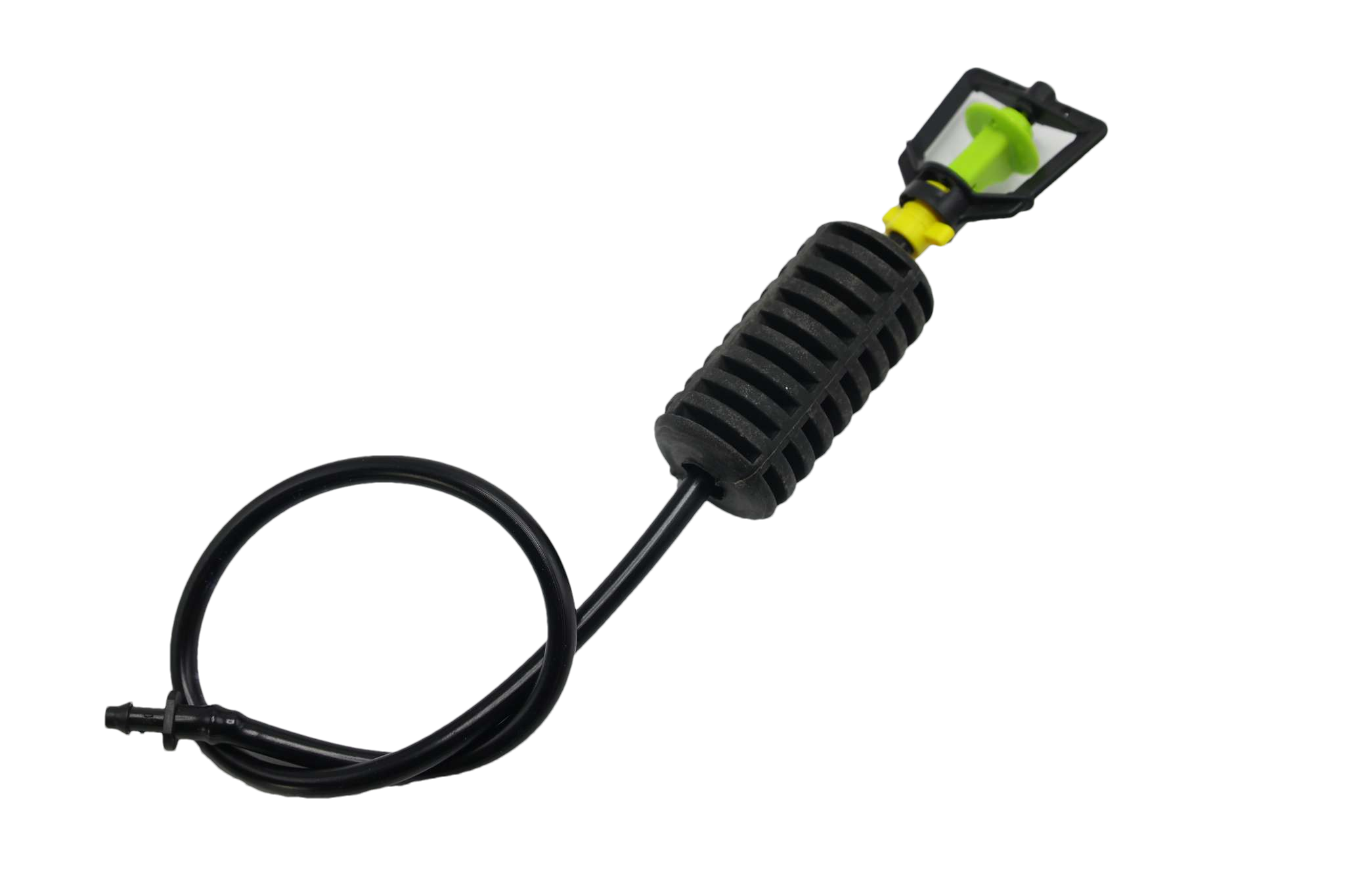
How Hanging Micro Spray Irrigation Works
Core Mechanism: Pressure-driven low-volume droplet dispersion for high-uniformity irrigation
Hanging micro spray irrigation works by pushing water through low pressure emitters, usually between 10 and 30 psi, which turn water into tiny droplets around 200 to 800 microns wide. The system relies on pressure to spread water evenly without letting too much get blown away or evaporate before it hits the ground. These setups put out far less water than regular sprinklers do, somewhere between 20 and 40 gallons each hour per emitter, and they tend to distribute water pretty uniformly, often better than 85%. Because the droplets stay consistent in size and follow predictable paths, plants throughout the field receive similar amounts of moisture. Water applies slowly enough that it doesn't wash away from the soil surface, making it especially good for crops that don't handle excess water well. Farmers who install these systems right and keep them in good shape can cut down on wasted water by about half compared to traditional flood methods. Plus, controlling how much water goes where helps roots grow stronger over time as plants adapt to regular hydration patterns rather than sudden bursts.
Key System Components: Emitters, risers, pressure regulators, and mandatory filtration for clog prevention
Four interdependent components ensure reliable, long-term performance:
- Emitters: Precision nozzles engineered for specific spray patterns (full or part-circle) and targeted droplet spectra
- Adjustable Risers: Position emitters 12–36 inches above crops to optimize canopy coverage and avoid physical interference
- Pressure Regulators: Maintain stable 20–25 psi operating pressure despite elevation changes or line friction loss
- Filtration Systems: 120-mesh screen or disk filters remove particles ≥100 µm to prevent nozzle clogging
| Component | Function | Failure Impact |
|---|---|---|
| Filter | Removes ≥100µm particles | 90% emitter clog risk within 30 days without filtration |
| Pressure Regulator | Stabilizes flow variance | ±40% discharge fluctuation across slopes |
| Emitter | Controls droplet dispersion | Pattern distortion & dry zones |
Good filtration simply cannot be ignored. Even tiny bits of sediment or organic matter will quickly mess up emitter functions, causing patchy watering patterns and eventual system breakdowns. When paired with regular checks on diaphragms inside pressure regulators, these combined efforts keep systems running reliably over 95% of the time according to field tests. Adjusting riser heights helps match different plant growth phases, while those handy quick connect fittings make maintenance much easier without throwing off established watering routines. Most growers find these practical solutions save them headaches down the road.
Types of Hanging Micro Sprinklers for Targeted Irrigation
Rotary Models: Wide-coverage patterns ideal for tall crops and uniform canopy wetting
The rotary hanging micro sprinkler system features nozzles that spin around mechanically, creating circular water patterns anywhere from 3 to 10 feet wide. These work really well for those tall orchard trees and plants with thick, layered leaves. Farmers can adjust the spray pattern too - going from complete circles when there's plenty of space, down to just parts of a circle near borders where plants are growing close together. They sit on adjustable risers which helps water reach all the way through the different layers of leaves and branches. What makes these sprinklers stand out is their movement while spraying. This gives better water distribution than regular fixed emitters, hitting over 85% uniformity across the area. The water flows at controlled rates between 10 and 30 gallons each hour, so it doesn't wash away from delicate roots. When these sprinklers overlap their coverage in the air, they spread moisture evenly throughout complicated plant structures without messing up the soil underneath.
Refraction & Atomized Variants: Fine-droplet (Dv50 < 800 µm) delivery optimized for reduced evaporation loss
Refraction style micro sprayers break apart water streams through specially designed angled surfaces, creating very fine droplets typically around 400 to 700 microns in size (Dv50). The resulting mist cuts down on wind drift problems and can cut evaporation losses by roughly 30 percent when compared to regular sprinkler systems. Because these tiny droplets have such a large surface area relative to their volume, they evaporate faster, which helps cool the air slightly something that matters a lot inside greenhouses and other enclosed spaces. What makes these systems particularly good for plants is how they stick gently to leaves rather than pounding them with water, so there's less moisture sitting on foliage this helps keep fungus at bay in controlled growing environments. When hung from above, these setups create stable humidity zones perfect for expensive ornamental plants and delicate seedlings. Most models come with built in 200 mesh filters that stop small particles from getting into the nozzles and causing blockages over time.
Greenhouse and Controlled-Environment Irrigation Applications
High-Efficiency Tomato Production: Dutch-style solar greenhouses using drop-down hanging micro spray irrigation
Dutch style solar greenhouses often feature these drop down hanging micro spray systems where the emitters sit right above the tomato plants. They send out small amounts of water straight to where the roots need it most. Putting the sprays up high keeps leaves dry which helps fight off those pesky fungi problems such as Botrytis and Phytophthora especially when growing lots of plants close together. Studies show these systems save about 30 percent on water compared to regular sprinklers on top. Plus, because the moisture stays steady through all growth phases from leaves to flowers to fruits, plants absorb nutrients better. Farmers notice their tomatoes grow more evenly, last longer on store shelves, and produce steadier harvests even when weather changes around them.
Climate-Irrigation Integration: Reducing leaf wetness and fungal incidence by 37% via synchronized control
Modern greenhouses are now combining hanging micro spray systems with continuous climate monitoring through humidity, temperature, and dew point sensors to better time when watering happens. The system knows what to do when it senses conditions close to dew point levels, so it stops watering to keep leaves from staying wet too long. Watering starts again only when the environment can quickly evaporate those droplets off the plants. Research from the Food and Agriculture Organization shows these smart systems cut down on fungal problems by around 35-40% because they remove the damp spots where pathogens love to grow. For big operations, going fully automatic means less hands-on work for staff while still keeping plants properly hydrated. Growers find this approach saves money on labor costs and makes decision making based on actual data instead of guesswork.
Landscape and Nursery Irrigation Advantages
Hanging micro spray systems work really well for landscapes and nurseries because they deliver water exactly where it needs to go. Instead of soaking leaves like traditional sprinklers do, these sprays hit the roots directly. That cuts down on water lost to evaporation by about half compared to regular rotors or spray heads. Plus, when leaves stay dry, there's less chance of fungal problems developing in those fancy plants and containers we grow. The fact that these sprays hang above ground means no water runs off hillsides or hard packed soil either. This saves water and keeps the dirt from washing away in sensitive ecological spots. Most nurseries find that automated timers make things easier too. They can run during off peak hours which saves money on electricity costs and reduces the need for manual watering by around 30%. Gardeners love how this system helps establish native plants and drought tolerant species without using tons of resources. It's become a go-to solution for creating green spaces that actually survive our changing climate conditions.
FAQ
What is micro spray irrigation?
Micro spray irrigation is a low-pressure irrigation method that disperses water droplets evenly over crops, providing uniform moisture coverage and reducing water wastage.
What are the advantages of using hanging micro spray irrigation in greenhouses?
Hanging micro spray irrigation in greenhouses offers benefits like reducing water wastage, preventing leaf wetness and fungal issues, saving labor costs, and ensuring consistent moisture levels for plants.
How can micro spray systems help with water conservation?
Micro spray systems conserve water by delivering precise amounts to the plants' roots, minimizing evaporation and surface runoff, which is more efficient than traditional irrigation methods.
Are micro spray systems suitable for all crop types?
Micro spray systems are particularly effective for crops that require regular moisture and have a low tolerance for overwatering, such as certain vegetables, fruits, and ornamental plants.