
 EN
EN
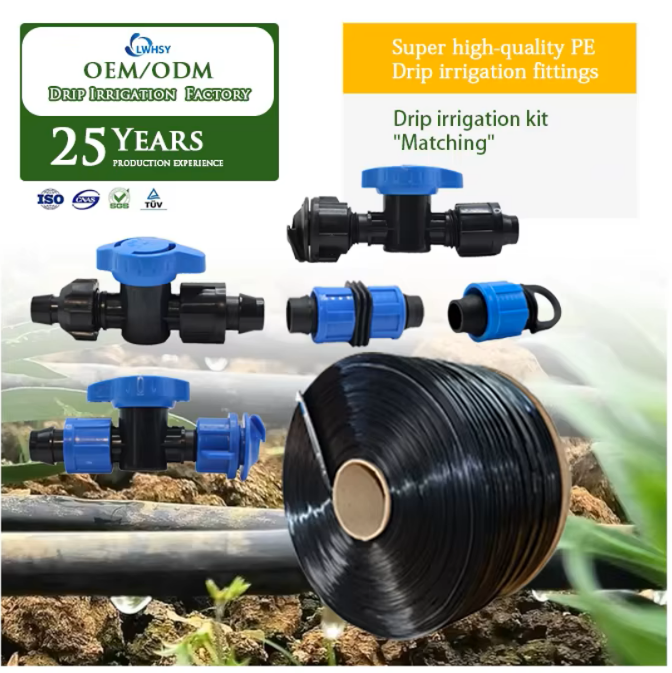
Understanding PE Quick Connect Fittings and Their Role in Drip Tape Valve Systems
What Are PE Quick Connect Fittings and How They Integrate with Drip Tape Valve Setups
Quick connect fittings made for PE tubing work great in drip irrigation setups. They have this push-to-lock design that connects the tubing right onto those drip tape valves which control how much water goes to each emitter. No need for any clamps or glue here. These fittings come in standard sizes ranging from quarter inch all the way up to two inches, so they fit pretty much every drip tape valve outlet on the market today. What makes them stand out is their smooth inside surface. This actually cuts down pressure losses between 15 and 22 percent when compared to regular threaded connections. For anyone running an irrigation system, this means better overall water distribution throughout the entire setup without losing too much pressure along the way.
Key Advantages of Using Quick Connect Fittings in Irrigation Applications
- Faster installation: Cuts assembly time by 60% versus traditional barbed fittings.
- Leak resistance: Integrated O-rings compress against tubing walls to create reliable seals.
-
Reusability: Can be disconnected and repositioned without damaging tubing or valves.
A 2022 study by the Irrigation Technology Council found farms using these fittings saved an average of 9 hours per acre annually on maintenance, primarily due to reduced disassembly and troubleshooting.
Common Materials and Durability Metrics for PE Fittings
| Property | HDPE Fittings | MDPE Fittings |
|---|---|---|
| Tensile strength | 50,000 PSI | 35,000 PSI |
| UV resistance | 20+ years | 10–15 years |
| Temperature tolerance | -40°F to 180°F | -20°F to 140°F |
| High-density polyethylene (HDPE) is the preferred material due to its superior stress crack resistance, exceeding 10,000 hours in accelerated testing (2023 Polymer Durability Report). |
Industry Data on Failure Rates Before and After Adoption of Quick Connect Technology
Traditional systems using threaded or glued connections experience an average of 2.1 leaks per 100 connections annually. Switching to PE quick connect fittings reduces junction failures by 63% (Irrigation Association 2022), resulting in a 19% decrease in water waste across surveyed commercial operations.
Tools, Compatibility, and Preparation for Installing PE Quick Connect Fittings
Essential Tools Required for a Smooth Installation Process
A proper toolkit ensures reliable connections:
- Pipe cutters for clean, square cuts—reducing leak risks by 64% compared to utility knives
- Deburring tools to eliminate edge imperfections that compromise seals
- Calibration gauges to verify tubing ovality stays within 2% deformation tolerance
- Pressure test kits capable of verifying performance at 1.5× operating PSI
Per ASABE EP408.3 standards, technicians should inspect and calibrate tools monthly; improper tool use accounts for 93% of failed installations.
Selecting the Right Size Fitting for Your Drip Tape Valve Configuration
Mismatched diameters cause 41% of irrigation leaks (IA 2023 Audit Report). To ensure compatibility:
- Match fitting ID/OD to tubing specifications within ±0.3mm tolerance
- Confirm thread patterns align with valve inlets (NPT vs BSPP)
- Verify maximum pressure ratings exceed system demands by 25%
For 19mm drip tape valves, 20mm fittings with compression sleeves typically deliver optimal flow rates of 4–6 GPM while minimizing velocity-induced erosion.
Ensuring Compatibility Between Fittings, Tubing, and Drip Tape Valves
Use consistent polymer grades—mixing HDPE and MDPE can lead to differential expansion and leaks at temperatures above 68°F. Conduct:
- Chemical compatibility checks when used with fertilizer injection systems
- UV degradation tests for exposed installations
- Thermal cycle validation across the expected operational range (-40°F to 140°F)
Systems incorporating pressure-compensated drip tape valves demonstrate 22% longer fitting lifespans due to reduced hydraulic shock, according to 2022 irrigation durability studies.
Step-by-Step Installation of PE Quick Connect Fittings in Drip Irrigation Systems
Step 1: Measuring and Cutting PE Tubing to Match Drip Tape Valve Layout
Lay out the system design and measure tubing runs with a flexible tape. Add 10% extra length to accommodate thermal contraction—PE tubing can shrink up to 3% in cold conditions per ASTM D3350. Cut squarely using a dedicated tubing cutter to prevent angled ends that impair sealing.
Step 2: Preparing the Pipe Ends for Secure Connection to Quick Fittings
Deburr cut edges with a 45° chamfer tool to remove micro-cracks and ridges. Wipe the outer 2 inches of tubing with isopropyl alcohol to eliminate dust and contaminants, which contribute to 68% of premature fitting failures (Irrigation Association 2023).
Step 3: Inserting the Tubing into the Quick Connect Fitting Until It Locks
Align the tubing straight with the fitting’s collet and push firmly until the stainless-steel teeth engage the retention groove with an audible click. Avoid twisting during insertion, as this can misalign the dual O-ring seals and weaken the joint.
Step 4: Connecting the Assembly to the Drip Tape Valve Outlet
Hand-tighten the male thread onto the valve outlet, applying Teflon tape to the first two threads only. Rotate the fitting—not the tubing—to prevent stress buildup. For 1” fittings, apply 24–27 ft-lbs of torque in accordance with ISO 2230 specifications.
Step 5: Performing a Pressure Test to Confirm Leak-Free Operation
Pressurize the system to 1.5× normal operating pressure (typically 20–30 PSI) and hold for 30 minutes. Apply soap solution to all joints—bubbles indicate incomplete seating or contamination. Properly installed systems achieve 97.3% leak-free performance in commercial settings (USDA-NRCS 2023 data).
Troubleshooting Common Issues with PE Quick Connect Fittings Near Drip Tape Valves
Identifying Causes of Leaks at the Quick Connect Junction
Leaks near drip tape valves commonly stem from worn O-rings (responsible for 42% of field failures), debris in the locking mechanism, or insufficient insertion depth. Inspect O-rings regularly and ensure tubing is fully seated until the audible click confirms engagement.
Fixing Misaligned or Over-Tensioned Fittings in Field Installations
Misalignment often occurs when orientation marks between valves and fittings don’t match. Rotate the fitting until notches interlock, then tighten by hand only—over-tightening with tools increases cracking risk by 31% (Agricultural Plumbing Journal 2023). For tension issues, install mounting clamps within 6 inches of the connection to evenly distribute stress.
Reusable vs. Permanent Quick Connect Solutions: Best Choice for Commercial Drip Tape Valve Systems
For setups that change with the seasons or need regular adjustments, reusable fittings work pretty well. They do need new O-rings every six months or so though. On the flip side, those permanent ones sealed with epoxy don't need any maintenance after installation, but they're really only good for systems that stay put and handle pressures above 60 pounds per square inch. We've seen commercial farms that constantly rearrange their equipment save around 19 percent on costs by going with the reusable stuff. But if a farm has equipment that stays in one place for years at a time, the permanent fittings tend to last much longer without issues. Most growers find this balance between what works now and what lasts makes sense for their particular situation.
Maintenance Best Practices for Long-Term Performance of PE Quick Connect Fittings
Proper maintenance extends service life, prevents water loss, and reduces downtime in drip tape valve systems. Follow these evidence-based practices to maintain peak performance.
Routine Inspection Checklist for Fittings Adjacent to Drip Tape Valves
Perform visual inspections every two weeks during active irrigation:
- Check for surface abrasions or UV degradation
- Test O-ring integrity using leak detection fluid
- Confirm fittings remain fully seated by checking rotational stability
- Look for mineral deposits around drip tape valves that could affect seal quality
Cleaning Procedures to Prevent Debris Build-Up in Quick Connect Joints
Quarterly flushing with a 4:1 water-vinegar solution effectively dissolves calcium deposits without harming polyethylene. For stubborn buildup:
- Disconnect fittings using manufacturer-approved release tools
- Clean internal surfaces with nylon brushes—metal tools may scratch and compromise seals
- Rinse thoroughly with filtered water to remove abrasive particles before reassembly
When to Replace Rather Than Repair a PE Quick Connect Fitting
Replace immediately if you observe:
- Cracks deeper than 1.5 mm
- Permanent deformation preventing alignment with drip tape valves
- Internal corrosion reducing flow capacity by more than 15%
Field data shows proactive replacement lowers total costs by 40% compared to repeated repairs, particularly in large-scale agricultural systems where failure cascades are common.
FAQ
What materials are used for PE quick connect fittings?
PE quick connect fittings are primarily made from high-density polyethylene (HDPE) and medium-density polyethylene (MDPE), with HDPE being preferred for its superior stress crack resistance.
How do quick connect fittings improve irrigation systems?
Quick connect fittings improve irrigation systems by reducing installation time by 60%, offering leak resistance through integrated O-rings, and allowing for easy disconnection and repositioning.
How can I ensure compatibility between fittings, tubing, and drip tape valves?
Consistency in polymer grades is crucial. Mixing HDPE and MDPE can lead to differential expansion. Ensure chemical, UV, and thermal compatibility, especially in exposed or fertilized systems.
What maintenance practices are recommended for PE quick connect fittings?
Recommended maintenance practices include regular inspections, cleaning to prevent debris buildup, and replacing fittings when structural integrity is compromised.
Table of Contents
-
Understanding PE Quick Connect Fittings and Their Role in Drip Tape Valve Systems
- What Are PE Quick Connect Fittings and How They Integrate with Drip Tape Valve Setups
- Key Advantages of Using Quick Connect Fittings in Irrigation Applications
- Common Materials and Durability Metrics for PE Fittings
- Industry Data on Failure Rates Before and After Adoption of Quick Connect Technology
- Tools, Compatibility, and Preparation for Installing PE Quick Connect Fittings
-
Step-by-Step Installation of PE Quick Connect Fittings in Drip Irrigation Systems
- Step 1: Measuring and Cutting PE Tubing to Match Drip Tape Valve Layout
- Step 2: Preparing the Pipe Ends for Secure Connection to Quick Fittings
- Step 3: Inserting the Tubing into the Quick Connect Fitting Until It Locks
- Step 4: Connecting the Assembly to the Drip Tape Valve Outlet
- Step 5: Performing a Pressure Test to Confirm Leak-Free Operation
- Troubleshooting Common Issues with PE Quick Connect Fittings Near Drip Tape Valves
- Maintenance Best Practices for Long-Term Performance of PE Quick Connect Fittings
- FAQ